






What's Happening?
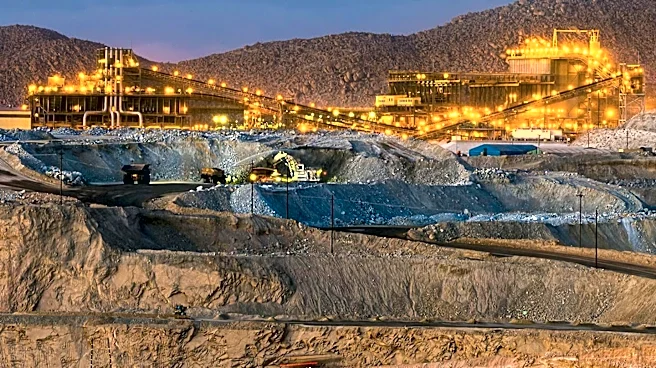
In Madre de Dios, Peru, gold mining is a significant economic activity for thousands of people, but it is also causing substantial environmental damage to the Amazon rainforest. The industry is contributing to mercury pollution and deforestation, severely
impacting one of the world's most biodiverse regions. In response, a formalized artisanal mining operation in La Pampa, an area known for gold mining, is attempting to implement mercury-free technologies. This initiative aims to demonstrate that small-scale mining can be conducted sustainably, producing what is referred to as 'clean gold.' However, the transition to more responsible mining practices is fraught with difficulties, including violence, the prevalence of informal economies, bureaucratic hurdles, and limited government support. The challenges highlight the complex interplay between environmental protection and economic survival in the region.
Why It's Important?
The situation in Peru's Madre de Dios region underscores a critical global challenge: balancing economic development with environmental preservation, particularly in resource-rich, ecologically sensitive areas. The widespread mercury pollution and deforestation have severe long-term consequences for the Amazon's biodiversity, indigenous communities, and global climate stability. Efforts to introduce mercury-free technologies are vital for mitigating these environmental impacts and promoting a more sustainable mining industry. If successful, these initiatives could serve as a model for other regions facing similar dilemmas, demonstrating that responsible mining is achievable. Conversely, failure to address these challenges could lead to irreversible ecological damage and exacerbate social conflicts, impacting the livelihoods and health of local populations and potentially influencing international environmental policy and trade relations concerning responsibly sourced minerals.
What's Next?
The future of gold mining in Madre de Dios will depend on the success of initiatives promoting mercury-free technologies and the ability to overcome significant operational and systemic obstacles. Continued efforts will likely focus on formalizing artisanal mining operations, providing technical assistance for sustainable practices, and strengthening governance to combat illegal mining and associated violence. Increased government support, both in terms of policy and enforcement, will be crucial for creating an environment where responsible mining can thrive. Additionally, international pressure and consumer demand for 'clean gold' could play a role in incentivizing more sustainable practices. The ongoing narrative will involve monitoring the effectiveness of these new technologies and assessing their broader adoption, while also addressing the socio-economic factors that drive informal and environmentally damaging mining activities.
Beyond the Headlines
The struggle for sustainable gold mining in Peru reveals deeper issues beyond immediate environmental concerns. It highlights the complex socio-economic dynamics that often drive informal economies, where individuals resort to environmentally harmful practices out of necessity due to limited alternatives and insufficient government oversight. The presence of violence and bureaucratic obstacles further complicates efforts to introduce positive change, reflecting systemic governance weaknesses and the power of illicit networks. This situation also touches upon the global supply chain for gold, raising questions about consumer responsibility and the demand for ethically sourced materials. The long-term shift towards sustainable mining requires not just technological solutions but also comprehensive strategies that address poverty, provide alternative livelihoods, strengthen legal frameworks, and foster greater collaboration between governments, local communities, and international organizations to ensure both ecological integrity and human well-being.