

What's Happening?
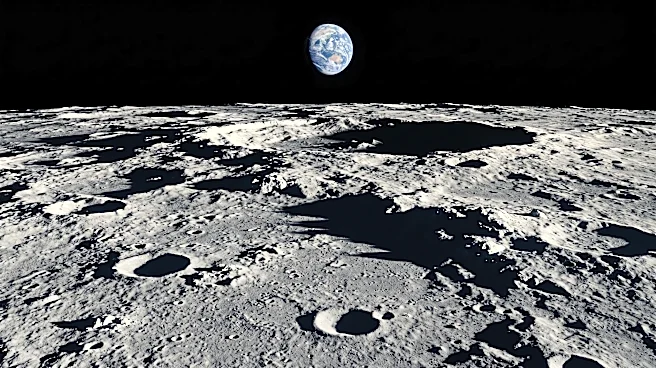
A recent NASA study, published in Science Advances, suggests that human-related microbes could survive for extended periods on the lunar surface, particularly in the Moon's south polar regions. Researchers, led by Prabal Saxena of Goddard Space Flight
Center, mapped where five common human-associated microbes (three bacteria: Bacillus, Staphylococcus, Deinococcus; and two fungi: Aspergillus, Fusarium) could withstand the Moon's harsh conditions, specifically ultraviolet (UV) radiation. Contrary to expectations that survivable microbes would cluster only in permanently shadowed regions, the study found survivable pockets spread across the entire polar regions. This is largely due to the lower UV radiation levels at the poles compared to the equator, and the ability of even small surface features to cast shadows that offer protection. The fungus Aspergillus demonstrated the highest survivability, lasting for a week or longer in some areas. The study highlights that spacesuits are not completely sealed and can vent astronauts' breath, potentially scattering microbes, and airlocks are also a likely source of contamination. This finding has significant implications for NASA's Artemis program, which aims to establish a permanent lunar base at the south pole.
Why It's Important?
This research is crucial for the integrity of future lunar scientific endeavors, particularly NASA's Artemis missions targeting the Moon's south pole. The potential for Earth-originating microbes to survive and contaminate lunar samples could compromise the search for extraterrestrial life or the study of the Moon's pristine environment. If astronauts inadvertently introduce and spread microbes, it becomes challenging to differentiate between indigenous lunar life (if any) and terrestrial contaminants. This could lead to misinterpretations of scientific data and potentially irreversible biological contamination of celestial bodies. The findings necessitate a re-evaluation of current planetary protection protocols and decontamination procedures for spacecraft and astronauts. Ensuring the scientific validity of lunar samples and preventing forward contamination of the Moon are paramount for responsible space exploration and the advancement of astrobiology.
What's Next?
The findings will likely prompt NASA and other space agencies to review and potentially enhance their planetary protection protocols for lunar missions. Astronauts on future missions, especially those involving sample collection at the lunar south pole, will need to implement more cautious procedures to prevent contamination. This could include stricter decontamination of equipment and spacesuits, as well as careful planning of traverse paths to avoid re-crossing previously contaminated areas. The research team, led by Stefano Bertone, co-author and University of Maryland associate research scientist, plans to extend their analysis to all Artemis candidate landing regions using higher-resolution topographic maps and more detailed modeling of UV radiation shifts. They also intend to conduct new lab experiments to precisely determine the survival duration of various microbes under controlled conditions. This ongoing research will inform decision-making processes for lunar exploration and potentially for future missions to Mars, where the risk of confusing terrestrial microbes with potential Martian life is a significant concern.
Beyond the Headlines
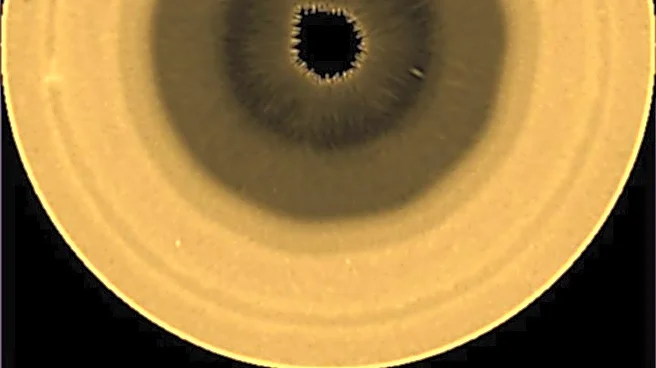
The study delves into the ethical and scientific complexities of planetary protection, a critical aspect of space exploration. The ability of terrestrial microbes to survive on the Moon raises fundamental questions about humanity's responsibility to preserve the pristine nature of other celestial bodies. Uncontrolled biological contamination could not only hinder scientific discovery but also potentially alter extraterrestrial environments in unforeseen ways. This research underscores the delicate balance between human exploration and environmental stewardship in space. Furthermore, the study highlights the resilience of microbial life, pushing the boundaries of our understanding of extremophiles and their potential to adapt to diverse environments, including those beyond Earth. The 'cinnamon roll' structure of sporadic E layers, mentioned in a related NASA article, also points to the unexpected complexities in space environments, emphasizing the need for multi-point measurements and detailed modeling to fully comprehend these phenomena.