


What's Happening?
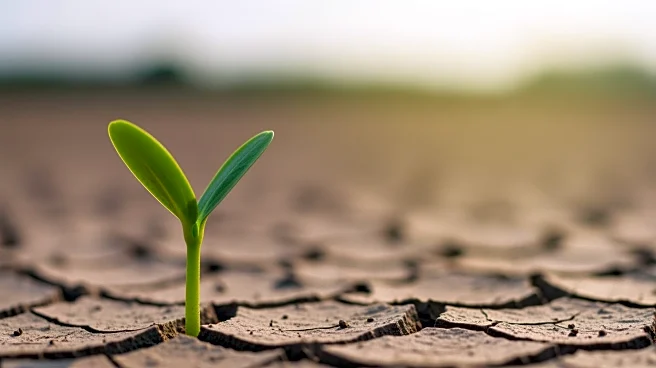
The Bulat Utemuratov Foundation is implementing an innovative approach to address the environmental disaster of the Aral Sea, which has lost 90% of its surface area due to excessive water diversion for cotton irrigation during Soviet times. The foundation
is introducing E-Seed technology, developed at the University of California, Berkeley, which involves biodegradable capsules containing seeds, a moisture-retaining gel, and wooden spirals. These capsules are distributed by drones to stabilize the soil by planting salt-tolerant vegetation. The project, in partnership with the International Fund for Saving the Aral Sea in Kazakhstan and Korkyt Ata Kyzylorda University, aims to restore the ecosystem over an area the size of Ireland. Pilot plantings will begin in spring 2026, with plans to expand in subsequent years.
Why It's Important?
The Aral Sea crisis is a significant environmental issue with global implications, as toxic dust from the dried seabed affects regions as far as Europe and the Arctic. The restoration efforts by the Bulat Utemuratov Foundation highlight the role of private capital and philanthropy in addressing climate challenges. The use of innovative technologies like E-Seed can potentially transform ecosystem restoration efforts, offering a scalable and efficient solution to stabilize the soil and combat desertification. This initiative not only aims to restore the local environment but also serves as a model for international cooperation in tackling climate-related issues.
What's Next?
The pilot project will commence in spring 2026, with an initial focus on a one-hectare site. The foundation plans to expand the project to 50 hectares by 2027, with further expansion in the following years. The success of this initiative could lead to broader adoption of similar technologies in other regions facing environmental degradation. Continued collaboration between governments, private entities, and international organizations will be crucial in scaling these efforts and achieving long-term environmental sustainability.
Beyond the Headlines
The Aral Sea restoration project underscores the importance of innovative solutions and cross-border cooperation in addressing environmental crises. The use of drones and biodegradable technology represents a shift towards more sustainable and efficient methods of ecosystem restoration. This approach could inspire similar initiatives worldwide, emphasizing the need for technological advancements and collaborative efforts in combating climate change and its effects.