
What's Happening?
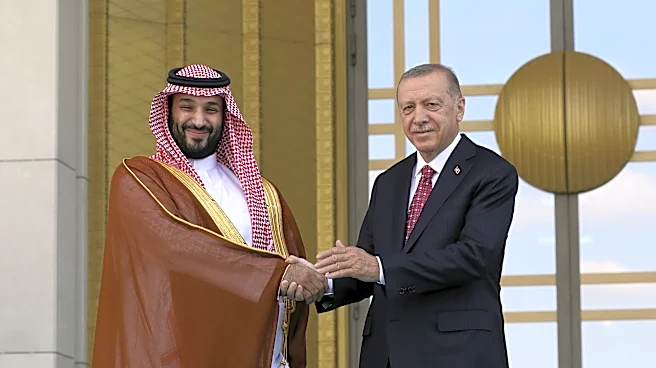
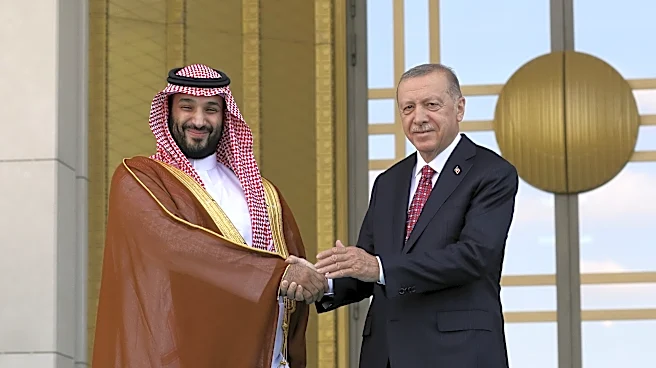
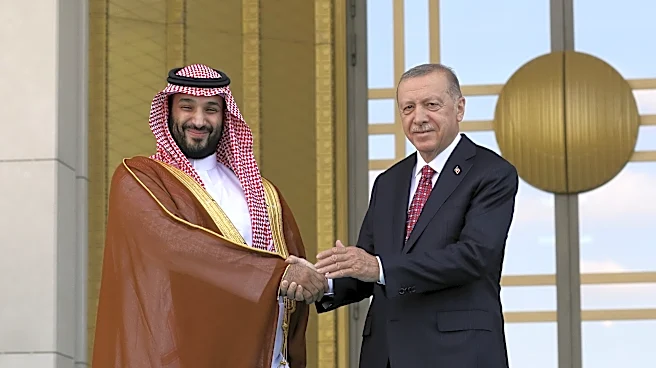
A new defense pact between Saudi Arabia, Pakistan, and Turkey has been signed, marking a significant step towards a new regional security architecture. This agreement, signed in Mecca, establishes a mutual
defense framework where an attack on one is considered an attack on all. The pact is seen as a response to the changing security landscape in the Middle East, particularly in light of recent conflicts and the perceived limitations of American military dominance in the region. The agreement brings together the military capabilities of the three countries, with Pakistan's powerful army, Turkey's NATO experience, and Saudi Arabia's advanced air force.
Why It's Important?
The signing of this defense pact represents a strategic realignment in the Middle East, as regional powers seek to organize their own security arrangements independent of traditional Western influence. This development could lead to a reduction in the U.S. military presence in the region, as local powers take on greater responsibility for their own defense. The pact also highlights the growing importance of regional cooperation in addressing security challenges, potentially leading to further integration among Gulf states. This shift could have significant implications for regional stability and the balance of power in the Middle East.
What's Next?
The new defense pact may prompt other regional powers to reconsider their security strategies and alliances. Gulf states may explore deeper integration with Saudi Arabia to enhance their security capabilities. The agreement could also lead to increased military collaboration among the signatories, including joint exercises and coordinated defense strategies. Additionally, the pact may influence the broader geopolitical landscape, affecting relations with Western powers and other regional alliances. Observers will be watching closely to see how this new security architecture develops and its impact on regional stability.