







What's Happening?
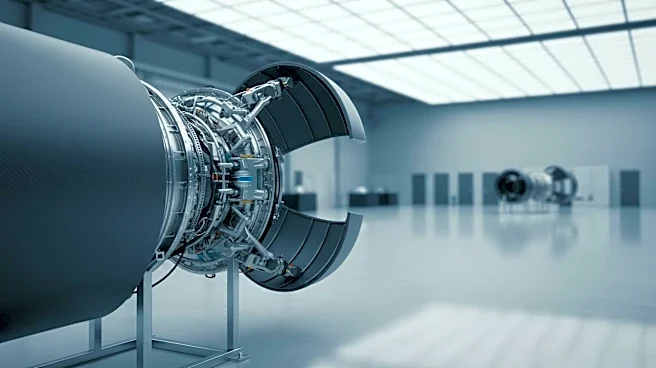
Airbus and MTU Aero Engines have announced a joint venture to develop hydrogen fuel cell propulsion systems for aircraft. This collaboration marks a significant step towards reducing aviation emissions by transitioning from traditional jet engines to hydrogen-powered
systems. The venture, expected to begin operations in 2027, will focus on engineering, testing, and certifying these systems for commercial use. This initiative is part of Airbus' broader ZEROe program, which explores various hydrogen-powered aircraft concepts. The joint venture aims to consolidate expertise from both companies, with Airbus contributing its experience in aircraft design and hydrogen storage, while MTU brings its engine engineering and certification skills. The partnership reflects a strategic move to transform advanced research into industrialized, certifiable electric propulsion systems.
Why It's Important?
The development of hydrogen-powered aircraft engines is crucial for the aviation industry's efforts to reduce carbon emissions. As global pressure mounts to address climate change, this joint venture represents a proactive approach to creating sustainable aviation technologies. By pooling resources and expertise, Airbus and MTU aim to accelerate the development timeline and maintain Europe's leadership in advanced propulsion technologies. The success of this venture could set a precedent for other aerospace companies, potentially leading to widespread adoption of hydrogen propulsion systems. This shift could significantly impact airline operations, fuel suppliers, and airport infrastructure, necessitating new standards and systems for hydrogen production, storage, and refueling.
What's Next?
The joint venture is set to begin operations in 2027, pending regulatory approval. In the coming years, Airbus and MTU will focus on overcoming technical challenges such as power output, weight, and hydrogen storage. The companies will also work with governments, industry partners, and aviation authorities to establish safety and certification standards. As the venture progresses, it will be crucial to develop the necessary infrastructure at airports to support hydrogen-powered aircraft. This includes creating systems for hydrogen production, transportation, and refueling. The success of this initiative could pave the way for hydrogen aircraft to become a viable option for airlines, contributing to the aviation sector's transition to lower-emission flight.
Beyond the Headlines
The establishment of this joint venture highlights the growing importance of collaboration in addressing global environmental challenges. By combining their strengths, Airbus and MTU are positioning themselves at the forefront of sustainable aviation technology. This move also underscores the need for a holistic approach to innovation, where technological advancements are supported by regulatory frameworks and infrastructure development. The success of hydrogen-powered aircraft could lead to broader acceptance of hydrogen as a clean energy source, influencing other industries to explore similar sustainable solutions.