
What's Happening?
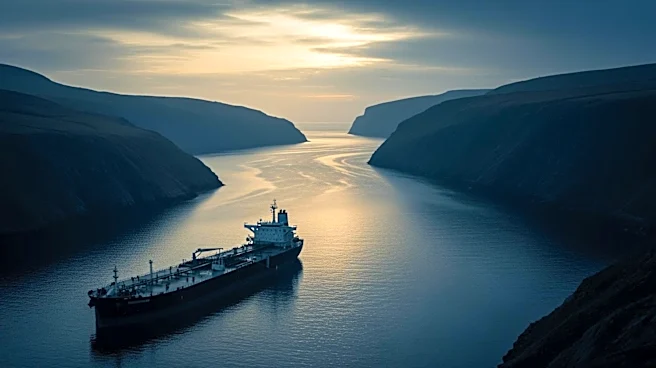
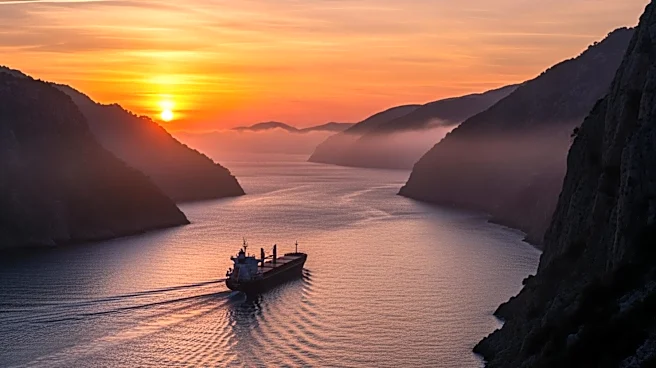
The Strait of Hormuz, a critical maritime passage connecting the Persian Gulf to the Gulf of Oman, is at the center of global economic concerns due to tensions involving Iran. This narrow waterway is a vital
route for approximately one-fifth of the world's daily oil supply and 20% of global liquefied natural gas. Recent disruptions have been caused by Iran's blockade, which has significantly reduced maritime traffic and increased security threats. The strait's strategic importance dates back thousands of years, serving as a key trade route for early civilizations. Today, its role in global energy and food security is crucial, as disruptions can lead to increased fuel prices and affect agricultural production worldwide.
Why It's Important?
The Strait of Hormuz is a critical chokepoint for global energy supplies, and any disruption can have far-reaching economic consequences. The current blockade by Iran has already led to rising energy prices and increased uncertainty in global markets. This situation underscores the vulnerability of global supply chains to geopolitical tensions and highlights the need for alternative routes and strategies to ensure energy security. The crisis also has implications for food security, as the strait is a major route for fertilizer exports from Gulf states, affecting agricultural production globally.
What's Next?
International leaders and organizations are likely to engage in diplomatic efforts to resolve the crisis and ensure the free flow of maritime traffic through the Strait of Hormuz. There may be increased pressure on Iran to lift the blockade and allow safe passage for vessels. Additionally, countries dependent on the strait for energy and food supplies may seek to diversify their sources and routes to mitigate future risks. The situation will require careful monitoring, as prolonged disruptions could lead to broader economic fallout.