


What's Happening?
New research published in Nature Geoscience proposes that Earth's water may have been generated internally during its formation, challenging the long-held theory that comets and asteroids were the primary sources. The study, led by Susmita Garai and Zachary
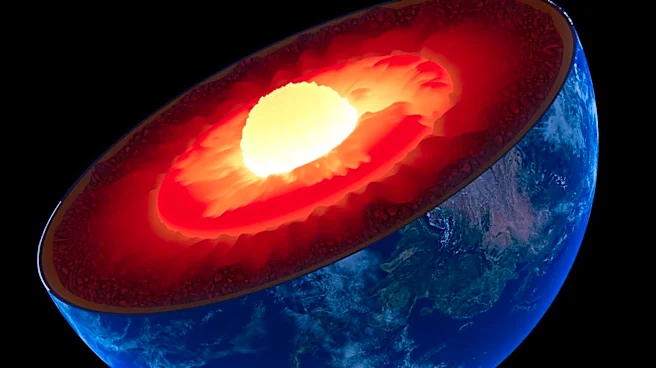
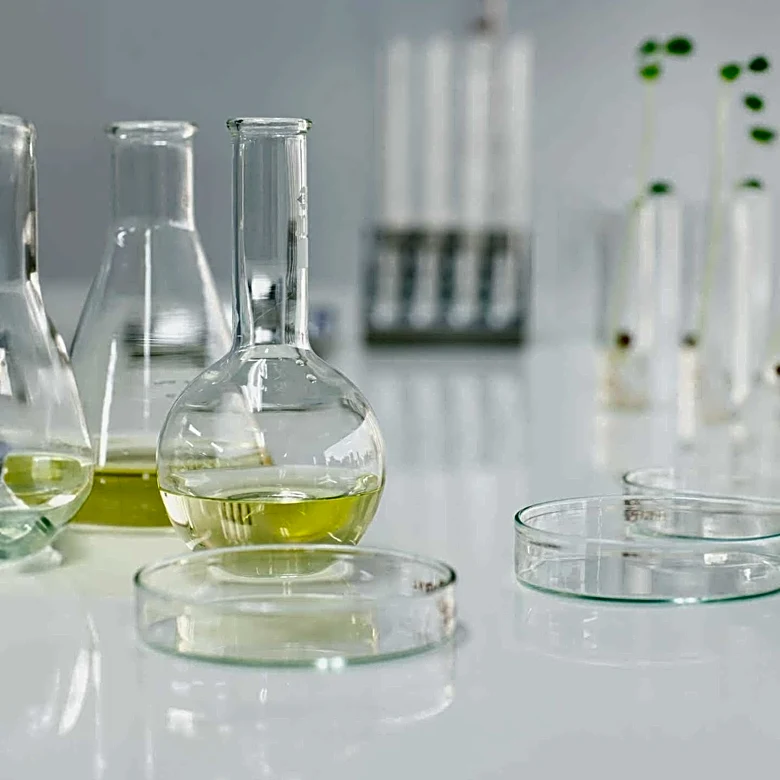
Sharp from the University of New Mexico, suggests that during Earth's early magma ocean phase, when it was accreting mass from millimeter-to-centimeter-sized silicate pebbles, water could have been produced within its hydrogen-rich atmosphere. Experiments conducted by the researchers simulated the extreme conditions of early Earth, heating silicate rock samples in hydrogen streams. They found that nearly 80% of iron oxide in the silicates was converted to metallic iron, releasing oxygen that then combined with atmospheric hydrogen to form water vapor. This process, termed 'dry pebble rain,' could have generated hundreds of ocean masses of water, sidestepping the timeline constraints and elemental abundance issues associated with external delivery theories.
Why It's Important?
This research fundamentally alters our understanding of planetary habitability and the origins of life. If Earth's water was largely self-generated, it implies that water might be a more common component of terrestrial planets than previously thought, increasing the likelihood of habitable worlds beyond our solar system. The study provides a new mechanism for water delivery that is intrinsic to planet formation, suggesting that virtually any Earth-sized planet could possess water through this process. This has profound implications for exoplanet research, guiding the search for life by refining our criteria for potentially habitable worlds. Furthermore, it resolves some inconsistencies in the timeline of water delivery by comets and asteroids, particularly concerning the Moon-forming impact and the Late Heavy Bombardment. The findings could lead to a paradigm shift in planetary science, influencing how scientists model planet formation and the conditions necessary for life to emerge.
What's Next?
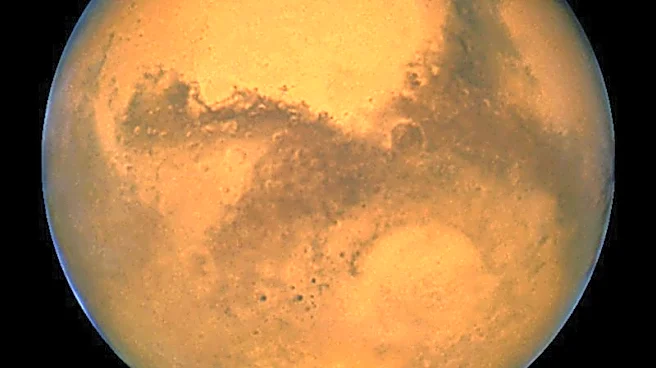
Further research is needed to quantify how much of Earth's water actually stemmed from this internal generation mechanism and to understand the net water gain, considering potential water loss through atmospheric escape. While this study provides early proof of the basic mechanism's possibility, it does not entirely rule out the contribution of comets and asteroids. Future investigations will likely focus on refining models of early Earth's atmosphere and accretion processes to determine the precise proportion of internally generated water versus externally delivered water. The implications of this research may also extend to other planets in our solar system, such as Mars, prompting new studies into their water origins. The scientific community will continue to explore the complex interplay of various processes that contributed to Earth's water inventory, aiming for a clearer, more comprehensive picture of our planet's unique habitability.
Beyond the Headlines
The concept that Earth may have brewed its own oceans in a 'hell-like atmosphere' billions of years ago paints a dramatic and awe-inspiring picture of our planet's violent birth. This research not only offers a scientific explanation for water's presence but also deepens our appreciation for the intricate and dynamic processes that shaped our world. It highlights the resilience and self-organizing nature of planetary systems, where fundamental elements for life can arise from the very chaos of formation. Ethically, this understanding could influence our perspective on humanity's place in the cosmos, suggesting that the conditions for life might be more inherent to planetary development than previously assumed. Culturally, it adds another layer to the narrative of Earth's origins, moving beyond external delivery to an internal genesis, a story of creation from within. This shift in understanding could inspire new artistic and philosophical interpretations of our planet's unique journey.