
What's Happening?
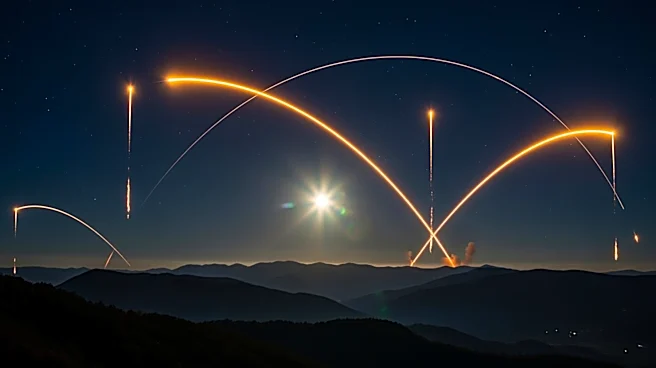
Hezbollah launched four rockets towards Shatula in the western Galilee, marking the first such incident in two days. This attack occurred just before the commencement of a second round of direct talks
between Israel and Lebanon at the White House, where President Trump is expected to participate. The rocket fire did not result in any injuries or damage. The Israeli military has been active in southern Lebanon, targeting what it describes as militant infrastructure. Recently, an Israeli airstrike in Nabatieh, north of the Blue Line, reportedly killed three individuals. The ongoing tensions underscore the fragile ceasefire between the two nations as diplomatic efforts continue.
Why It's Important?
The rocket attacks by Hezbollah highlight the persistent volatility in the region, which could undermine diplomatic efforts aimed at achieving a lasting peace. The involvement of President Trump in the talks signifies the importance the U.S. places on stabilizing the region. The situation poses a significant challenge to U.S. foreign policy, as it seeks to balance support for Israel with efforts to mediate peace. The outcome of these talks could have far-reaching implications for regional stability and U.S. relations with Middle Eastern countries.
What's Next?
As talks proceed at the White House, the international community will be closely monitoring the situation for any signs of escalation or progress. The U.S. may need to increase diplomatic pressure on both parties to adhere to the ceasefire and engage in constructive dialogue. Future developments could include further military actions by Israel if provocations continue, or potential sanctions and diplomatic measures by the U.S. to encourage compliance with peace efforts.