



What's Happening?
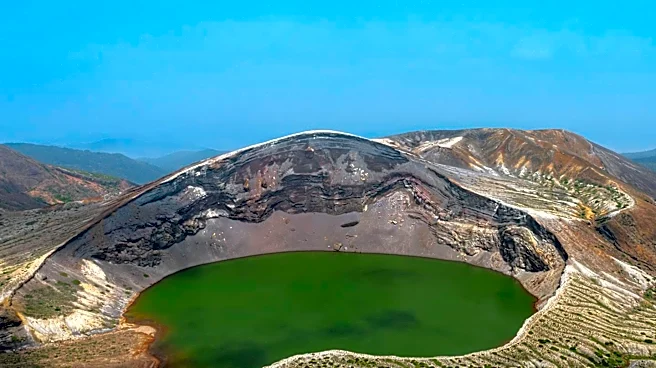
Several mountains across the United States host lakes within their summits, primarily in calderas formed by past volcanic eruptions. These unique geological features are found in various states, including Oregon, California, and Alaska. For instance,
Crater Lake in Oregon, the deepest lake in the U.S., fills the caldera of Mount Mazama, which collapsed after a massive eruption approximately 7,700 years ago. Similarly, Medicine Lake Volcano in northern California contains Medicine Lake within its caldera, offering recreational activities like swimming and boating. In Alaska, Mount Katmai's caldera, formed by a 1912 eruption, now holds a lake over 800 feet deep, while Aniakchak Volcano also features Surprise Lake within its 6-mile-wide caldera. These lakes are sustained by various sources, including rain, snow, warm springs, and melting glaciers, and often present unique challenges and opportunities for visitors due to their remote locations and severe weather conditions.
Why It's Important?
The presence of these caldera lakes highlights significant geological processes that have shaped the American landscape, offering insights into volcanic activity and its long-term environmental impacts. These sites are crucial for scientific research, providing natural laboratories to study hydrology, geology, and ecosystem development in extreme environments. From a recreational standpoint, they represent unique natural attractions, drawing tourists and outdoor enthusiasts who seek distinctive experiences like hiking, fishing, and kayaking in volcanic settings. However, their remote nature and often challenging access, as seen with Crater Lake's trail closures or Aniakchak's limited visitor numbers, underscore the need for careful management and conservation efforts. The varying accessibility and visitor services at these locations also reflect different approaches to balancing public access with environmental preservation, impacting local economies that rely on tourism.
What's Next?
Access to some of these unique volcanic lake sites will see changes in the coming years. For example, the Cleetwood Cove Trail at Crater Lake National Park, the only legal access point to the lake's shore, is currently closed for a major construction project and is not expected to reopen until 2029. This closure will continue to limit direct access to the water, impacting visitor experiences and park operations. Similarly, boat trips to Wizard Island at Crater Lake are suspended through 2027. Other locations, like Medicine Lake, continue to offer more accessible recreational opportunities with campgrounds and boat ramps opening seasonally. Future developments will likely focus on maintaining infrastructure, managing visitor impact, and continuing scientific monitoring of these geologically active and ecologically sensitive areas, while also addressing the challenges of climate change on these unique aquatic environments.
Beyond the Headlines
Beyond their immediate recreational and scientific value, these caldera lakes represent profound natural monuments to the Earth's dynamic geological history. They serve as stark reminders of the immense power of volcanic forces that have shaped continents and continue to influence landscapes. The varying levels of accessibility and preservation efforts at each site also reflect broader societal attitudes towards wilderness and conservation. For instance, the extreme remoteness and low visitor numbers at Aniakchak National Monument highlight a commitment to preserving pristine wilderness, while the more developed facilities at Medicine Lake cater to a different type of outdoor experience. These lakes also hold ecological significance, with some supporting unique aquatic life, such as the introduced fish species in Crater Lake, or acting as critical habitats for migrating salmon in rivers flowing from calderas. The ongoing study of these environments can provide valuable data for understanding long-term ecological resilience and adaptation in the face of geological and climatic changes.