



What's Happening?
Amtrak has awarded a $93 million contract to Skanska for the rehabilitation of the Dock Bridge in Newark, New Jersey. This infrastructure upgrade is part of the broader Gateway Program, a series of initiatives aimed at improving the Northeast Corridor
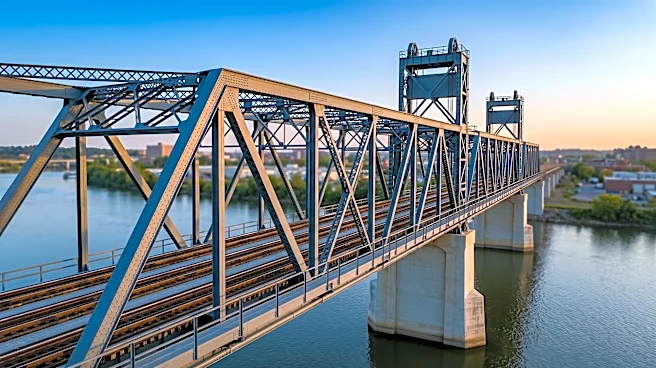
train line. The Dock Bridge, a six-track, triple-span movable lift bridge spanning the Passaic River between Newark and Harrison, was originally opened in 1935. It serves as a critical link for Amtrak, Port Authority Trans-Hudson (PATH), and New Jersey Transit passenger rail, handling approximately 720 train crossings daily. The rehabilitation work will involve decommissioning the movable spans and securing them in a fixed position, jacking existing bridge counterweights, and installing permanent counterweight supports. Additionally, the project includes rehabilitating concrete piers, removing the current fender system, replacing catwalk railings, supporting Amtrak force account work, and modifying traction power systems and miter rails. Construction on the Dock Bridge rehabilitation commenced earlier this year and is projected to be completed by the end of 2028.
Why It's Important?
The rehabilitation of the Dock Bridge is crucial for enhancing the reliability and efficiency of one of the nation's busiest rail corridors. As a vital artery for Amtrak, PATH, and New Jersey Transit, the bridge's improved infrastructure will directly benefit thousands of daily passengers by ensuring safer and more efficient operations. This project is a key component of the larger Gateway Program, which seeks to increase the capacity and resilience of the Northeast Corridor. By extending the life of the bridge and modernizing its components, the project aims to reduce potential delays and disruptions, thereby improving commuter and intercity rail services. The investment underscores a commitment to upgrading aging infrastructure, which is essential for supporting economic activity and facilitating transportation across the region. The successful completion of this project will lay a stronger foundation for future rail infrastructure developments, contributing to the long-term operational stability of the Northeast Corridor.
What's Next?
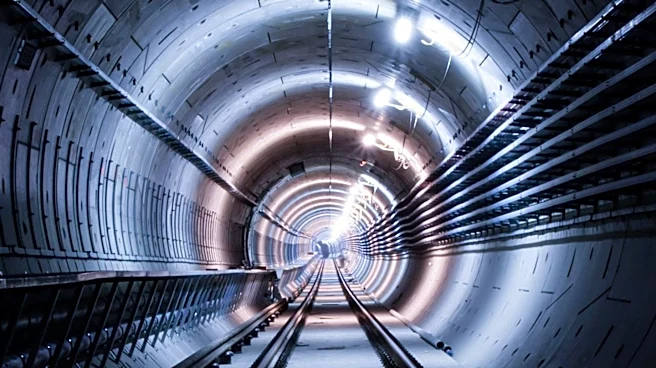
The rehabilitation of the Dock Bridge is expected to continue until its projected completion at the end of 2028. Following this, the improved bridge will contribute to the overall enhanced efficiency and reliability of the Northeast Corridor. This project is one of several under the Gateway Program, which also includes the replacement and demolition of the Portal North Bridge in Secaucus and the Sawtooth Bridges Replacement Project in Kearny, both also involving Skanska. The ultimate goal of the Gateway Program is the creation of two new tunnels under the Hudson River leading to Penn Station in New York City, a $16 billion endeavor that has already begun in Hudson County and is anticipated to be completed by 2035. The successful execution of the Dock Bridge rehabilitation will serve as a foundational step towards realizing the full scope of the Gateway Program's vision for a more robust and resilient rail network.
Beyond the Headlines
The Dock Bridge rehabilitation project highlights a broader national challenge and commitment to addressing aging infrastructure. The bridge, built in 1935, represents a significant portion of the country's critical transportation assets that require substantial investment to maintain functionality and safety. The Gateway Program, of which this project is a part, signifies a strategic long-term vision for modernizing the Northeast Corridor, a region vital to the U.S. economy. Beyond the immediate operational improvements, such large-scale infrastructure projects often stimulate local economies through job creation and demand for materials and services. The collaboration between Amtrak and Skanska on multiple Gateway Program components also demonstrates a sustained effort to tackle complex engineering challenges through public-private partnerships. The successful completion of these projects could set a precedent for future infrastructure development, emphasizing the importance of proactive maintenance and strategic upgrades to ensure the longevity and efficiency of national transportation networks.