





What's Happening?
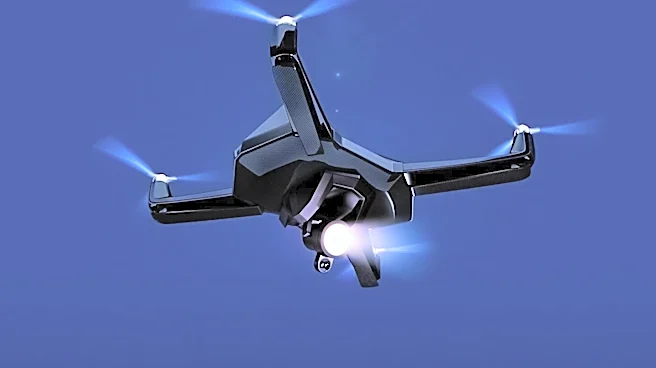
Russian law enforcement authorities have arrested eight individuals accused of planning an attack on a defense enterprise in the Moscow region. Russia's FSB security service stated that the group was found in possession of 35 explosive-equipped drones,
which were allegedly smuggled from the European Union. These drones were intended for use in an attack on a strategic defense facility. Additionally, a foreign national was detained in the Murmansk region while attempting to cross into Norway, suspected of spying on petroleum product trains at a Moscow railway station and surveilling government buildings in the capital. The FSB claims all nine individuals were operating on behalf of Ukrainian special services. Ukraine has not yet commented on these arrests, and Moscow routinely announces the detention of suspected Ukrainian agents.
Why It's Important?
These arrests highlight a significant escalation in alleged covert operations targeting Russian infrastructure and defense facilities, potentially indicating a broadening scope of conflict beyond traditional battlefronts. The reported use of drones smuggled from the European Union suggests a complex logistical network and raises concerns about border security and the flow of illicit materials. If confirmed, these incidents underscore the vulnerability of strategic sites within Russia and the persistent threat of sabotage. For the U.S. and its allies, this development could be seen as a proxy conflict intensifying, potentially leading to increased calls for vigilance regarding intelligence sharing and counter-terrorism efforts. The arrests also serve to reinforce Russia's narrative of external threats, which could be used to justify further domestic security measures or military actions.
What's Next?
Following these arrests, Russian authorities are expected to conduct further investigations to uncover the full extent of the alleged plot and identify any additional individuals involved. The detained individuals will likely face legal proceedings, which could be used by Russia to publicly demonstrate the alleged involvement of Ukrainian special services. This incident may lead to heightened security measures around critical infrastructure and defense enterprises across Russia. Internationally, these arrests could further strain diplomatic relations, with Russia potentially using the incident to accuse Ukraine and its Western allies of sponsoring terrorism. Ukraine's response, or lack thereof, will also be closely watched, as it navigates accusations of covert operations within Russian territory.
Beyond the Headlines
The alleged plot involving EU-smuggled drones and the detention of a foreign national for espionage reveal a sophisticated and multi-faceted approach to covert operations. This suggests a shift in tactics, moving beyond conventional warfare to include asymmetric threats within Russian borders. The narrative of 'Ukrainian agents' and 'EU-smuggled drones' could be strategically employed by Russia to galvanize domestic support, justify its actions, and potentially influence international opinion. The incident also raises ethical and legal questions regarding the conduct of intelligence operations in wartime, particularly concerning the involvement of non-state actors or foreign nationals. The long-term implications could include a more entrenched and clandestine conflict, with both sides engaging in covert actions that blur the lines of traditional warfare and increase the risk of miscalculation.