





What's Happening?
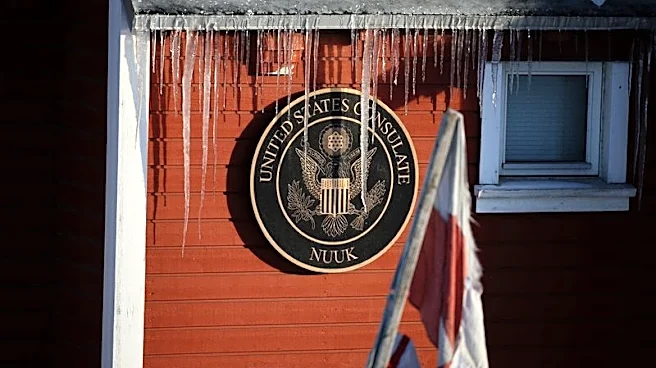
President Donald Trump has reignited controversy with a Truth Social post showing him gazing over Greenland, following protests against U.S. influence on the island. The post comes after Greenland residents demonstrated against the opening of a new U.S. consulate
and a visit by Louisiana Governor Jeff Landry, appointed by Trump as a special envoy to the Arctic island. Protestors chanted slogans like 'No means no' and 'Greenland belongs to the Greenlanders,' opposing U.S. plans to expand its presence. Trump has previously suggested annexing Greenland for security reasons, citing its strategic importance against Russia and China. The U.S. is reportedly pressing Denmark and Greenland for new military bases, raising sovereignty concerns. Landry's visit, marked by local resistance, included meetings with Greenlandic leaders, who reiterated that Greenlandic self-determination is non-negotiable.
Why It's Important?
The situation underscores the geopolitical tensions surrounding U.S. foreign policy under President Trump, particularly regarding territorial expansion and military strategy. Greenland's strategic location makes it a focal point for U.S. security interests, especially in the context of Arctic resources and military positioning against global powers like Russia and China. The protests highlight the resistance from Greenlandic and Danish leaders, emphasizing the challenges of pursuing such territorial ambitions. The U.S.'s push for military bases could strain relations with Denmark, a NATO ally, potentially impacting the alliance's cohesion. The controversy also reflects broader themes of national sovereignty and the ethical implications of territorial expansion, which could influence international diplomatic relations and U.S. foreign policy credibility.
What's Next?
Future developments may include continued diplomatic negotiations between the U.S., Denmark, and Greenland. The U.S. might face increased diplomatic pressure to address sovereignty concerns while balancing its strategic interests. Greenlandic leaders are likely to maintain their stance on self-determination, potentially leading to further protests or diplomatic standoffs. The situation could also prompt discussions within NATO regarding member states' territorial integrity and the implications of U.S. actions on alliance unity. Observers will watch for any shifts in U.S. policy or rhetoric, as well as responses from other international stakeholders concerned about Arctic geopolitics.
Beyond the Headlines
The controversy over Greenland highlights deeper issues of national identity and self-determination in the face of global power dynamics. It raises questions about the ethical considerations of territorial expansion and the potential consequences for indigenous populations. The situation also reflects the broader geopolitical competition in the Arctic, where climate change is opening new opportunities and challenges for resource extraction and military strategy. The U.S.'s actions could set precedents for how nations navigate these complex issues, influencing future international norms and policies regarding territorial claims and sovereignty.