









What's Happening?
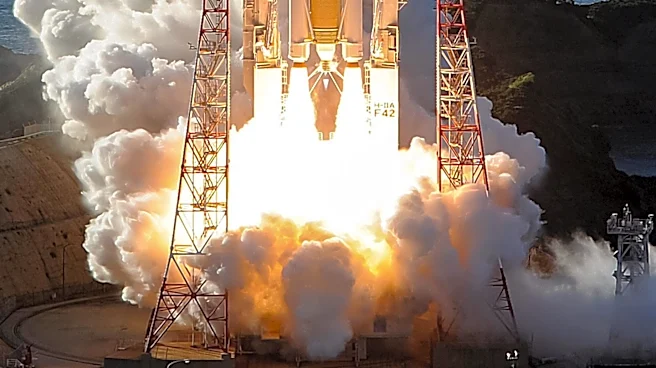
The Japanese government has set an ambitious goal to increase the number of space launches to 30 annually by the early 2030s. This target includes both government and commercial launches, aiming to boost the percentage of Japanese satellite launches conducted
domestically. Despite recent setbacks, such as the failure of the Kairos launch vehicle to reach orbit, Japan is determined to enhance its space launch capabilities. The government is considering regulatory reforms and public-private partnerships to support this growth.
Why It's Important?
Japan's push to increase its launch activity is significant for its space industry and technological advancement. Achieving this goal could position Japan as a major player in the global space launch market, fostering innovation and economic growth. The initiative also reflects Japan's strategic interest in enhancing its domestic capabilities and reducing reliance on foreign launch services. This development could lead to increased investment in the space sector and create opportunities for collaboration with international partners.
What's Next?
Japan will likely focus on overcoming technical challenges and improving the reliability of its launch vehicles. The government may implement policy changes to streamline the launch process and attract private investment. Collaboration with international space agencies and companies could also play a role in achieving the launch targets. The success of these efforts will depend on the ability to address current technical issues and build a sustainable launch infrastructure.
Beyond the Headlines
Japan's space ambitions highlight the broader geopolitical and economic implications of space exploration. As countries vie for leadership in space technology, Japan's efforts could influence global space policy and cooperation. The development of a robust space industry may also have cultural and educational impacts, inspiring future generations to pursue careers in science and technology.