





What's Happening?
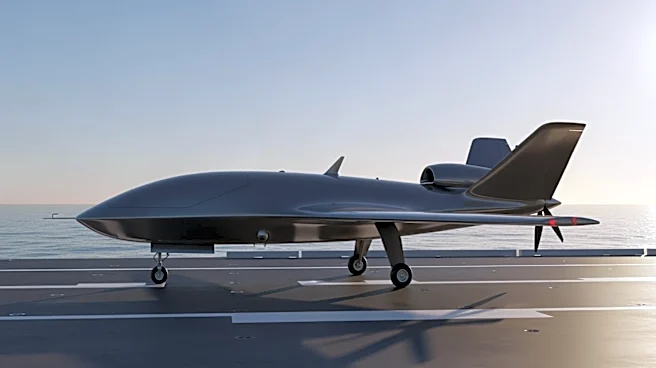
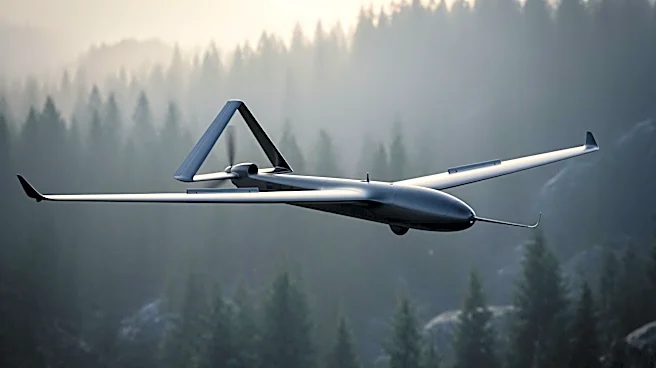
The U.S. military is testing glider drones, known as Grasshoppers, to improve stealth and resupply operations in contested environments. These drones, developed by Dzyne, can carry up to 500 pounds of cargo and are designed to operate with minimal electronic
emissions, reducing the risk of detection by enemy sensors. The testing took place during the Trojan Footprint exercise in Romania and Macedonia, where the drones successfully delivered supplies to U.S. troops. The initiative reflects the military's efforts to adapt to modern warfare challenges, where electronic emissions can compromise troop positions.
Why It's Important?
The development and testing of glider drones represent a significant advancement in military logistics and stealth technology. As modern battlefields become increasingly digitized, the ability to operate without electronic signatures is crucial for troop safety and mission success. These drones offer a solution for resupplying troops in areas where traditional methods are not feasible, enhancing operational flexibility. The initiative also highlights the military's shift towards reducing reliance on digital systems, a strategy that could redefine future combat operations.
What's Next?
The U.S. military will likely continue to refine and expand the use of glider drones, assessing their performance in various conditions and scaling their deployment. Further testing and development could lead to broader adoption across different branches of the military. The success of these drones may also prompt other countries to explore similar technologies, potentially influencing global military strategies. As the military adapts to new warfare dynamics, the integration of such technologies will be critical in maintaining strategic advantages.