








What's Happening?
A seven-year study conducted in Changsha, a subtropical metropolis in southern China, has found that cold temperatures are responsible for approximately nine times more temperature-related deaths than heat. The research, published in BMC Public Health,
analyzed over 344,000 non-accidental deaths between 2015 and 2021. It revealed that cold accounted for 7.70 percent of non-accidental deaths, while heat was linked to just 0.85 percent. Surprisingly, the majority of cold-attributable deaths (86 percent) occurred on moderately cold days, not extreme cold snaps, and 54 percent of heat-attributable deaths happened on moderately hot days. The study also highlighted a significant difference in the timing of these effects: cold-related mortality risk emerged gradually and could persist for over two weeks, whereas heat-related effects were rapid, typically confined to four days. This asymmetry suggests distinct biological mechanisms, with heat stress quickly impacting cardiovascular and respiratory systems, while cold slowly thickens blood, raises blood pressure, and strains the heart over a longer period.
Why It's Important?
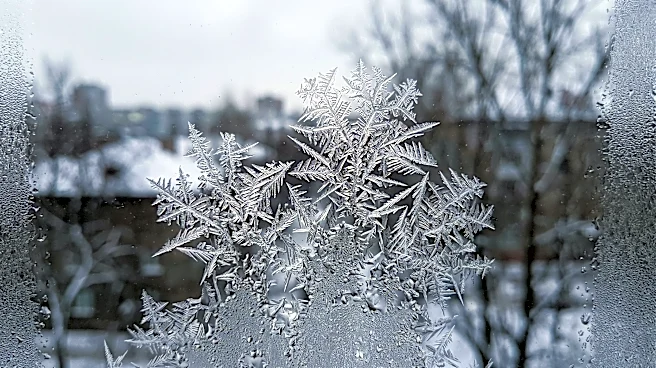
This study challenges the conventional focus of public health officials on heatwaves as the primary weather-related threat, suggesting that the 'quiet chill of winter' may be a significantly underestimated killer. The findings have critical implications for public health strategies globally, including in the U.S., where similar patterns of moderate temperature-related mortality might be overlooked. If a subtropical city like Changsha experiences such a high burden from cold, regions with more pronounced winters could face even greater, unrecognized risks. Understanding that most temperature-attributable deaths occur on moderate rather than extreme days means that public health warnings tied only to extreme events may miss a substantial portion of the danger. This necessitates a re-evaluation of public health campaigns and infrastructure, potentially shifting resources towards sustained cold protection measures, especially for vulnerable populations like older adults, who were identified as most at risk in the study.
What's Next?
The study's findings suggest a need for public health responses to be asymmetric, tailored to the distinct temporal dynamics of cold and heat. For heat, rapid emergency measures within a few days of a hot spell are appropriate. However, for cold, protection strategies need to be initiated before winter and maintained throughout the season, particularly targeting older adults. Policymakers and health organizations in the U.S. and other countries may need to review their current temperature-related mortality prevention programs. This could involve implementing broader public awareness campaigns about the dangers of moderate cold, improving insulation and heating access for vulnerable populations, and developing long-term support systems to mitigate cold-related health risks. Further research in diverse climatic regions, including those in the U.S., would be crucial to determine if these patterns are universal and to refine localized public health interventions.
Beyond the Headlines
The study's emphasis on moderate temperatures as the primary cause of temperature-related deaths highlights a deeper societal challenge: the normalization of conditions that, while not extreme, still pose significant health risks. This 'unremarkable day' phenomenon suggests that many deaths linked to temperature may be preventable through better public education and infrastructure, rather than just emergency responses to severe weather. It also underscores the physiological differences in how the human body responds to sustained cold versus acute heat, pointing to the need for nuanced medical and public health approaches. As climate change continues to alter global temperature patterns, understanding these subtle yet deadly impacts of temperature, particularly cold, becomes increasingly vital for long-term public health planning and resilience, moving beyond the sensationalism of extreme weather events to address the pervasive, quieter threats.