


What's Happening?
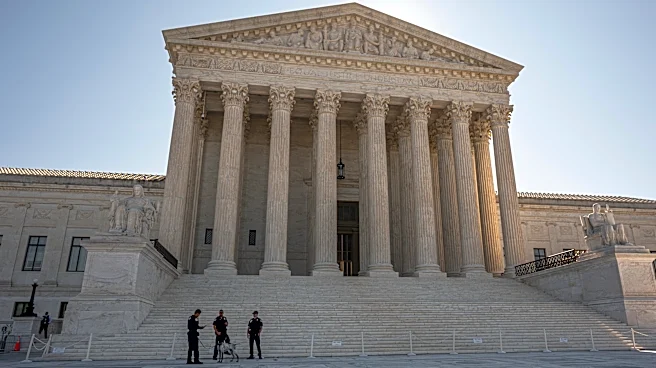
The Supreme Court has lifted a lower court's block on President Trump's executive order concerning mail-ballot voting, issued in late March. This decision comes ahead of the midterm elections. President Trump's order mandates three key changes to federal
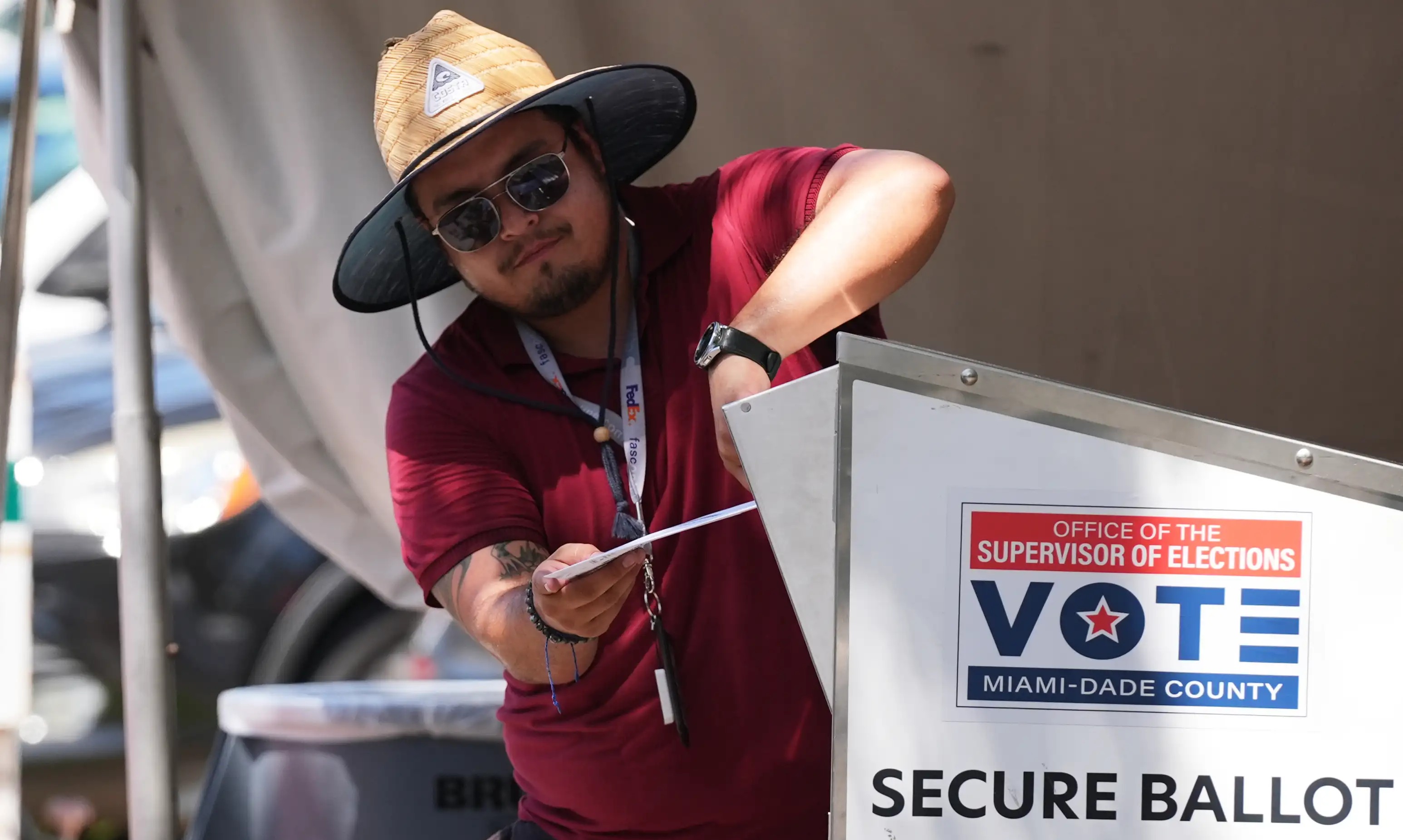
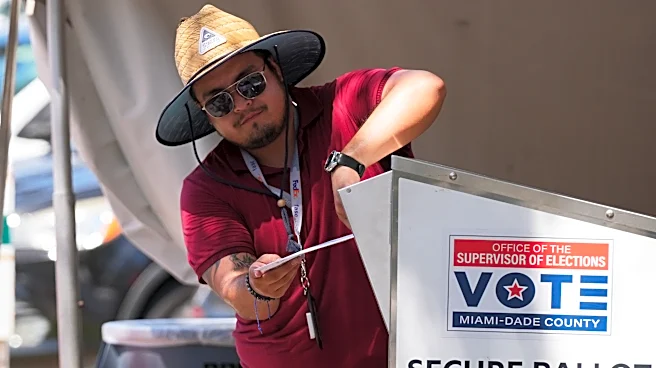
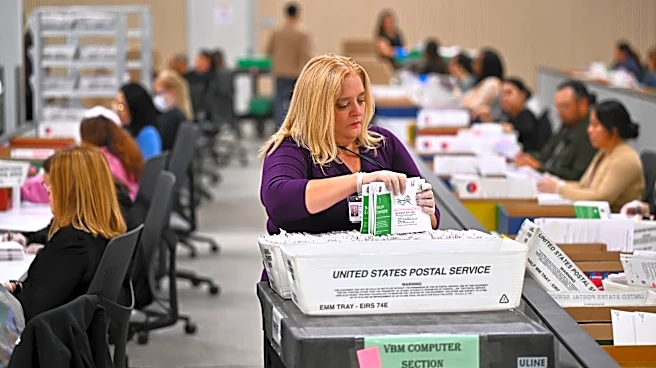
elections: requiring the Secretary of Homeland Security and the Social Security Administration to compile state citizenship lists to verify voter citizenship, and instructing the postmaster general to ensure all mail-in and absentee ballots are placed in secured envelopes marked 'Official Election Mail' with a unique intelligent mail tracking barcode. The order also called for states to provide the U.S. Postal Service with lists of voters intending to vote by mail and to prohibit the Postal Service from sending ballots to voters not on these lists. While the Supreme Court lifted the block, it did not rule on the legality of President Trump's order, instead stating that the states which sued lacked the legal standing to challenge it. The U.S. Election Assistance Commission reported that nearly one in three voters cast their ballots by mail in the 2024 general election.
Why It's Important?
This Supreme Court decision is significant for the upcoming midterm elections as it allows President Trump's executive order on mail-ballot voting to proceed, potentially altering voting procedures and access. The order's focus on voter citizenship verification and specific mail-ballot tracking measures could impact voter registration and the integrity of the voting process, particularly for certain demographics. For states, it introduces new requirements for coordinating with federal agencies and the U.S. Postal Service, which may necessitate adjustments to their election administration protocols. The ruling also highlights ongoing legal and political debates surrounding election security and voter access, with implications for future election policies. The increase in mail-in voting, especially since the 2020 election, makes any changes to these procedures highly impactful on voter turnout and the overall electoral landscape. This development could also influence public trust in election outcomes, depending on how the new measures are implemented and perceived.
What's Next?
Following the Supreme Court's decision, the U.S. Postal Service is expected to proceed with implementing the executive order, as outlined in its 95-page plan. This will involve coordinating with states to ensure compliance with the new mail-ballot requirements, including the use of secured envelopes and tracking barcodes. States will need to adapt their election processes to align with the federal mandates, particularly regarding voter citizenship verification and providing voter lists to the Postal Service. The legality of President Trump's order itself remains undecided, meaning future legal challenges could still arise from different parties with established legal standing. Political leaders and civil society groups are likely to closely monitor the implementation of these changes, potentially leading to further public discourse and advocacy regarding voter rights and election security. The impact on voter turnout and the efficiency of mail-in voting in the upcoming midterm elections will be a key area of observation.
Beyond the Headlines
The Supreme Court's decision to lift the block on President Trump's executive order on mail-ballot voting delves into deeper constitutional questions regarding federal and state authority over election administration. While the Court's ruling focused on legal standing rather than the merits of the order, it underscores the complex interplay between executive power, judicial review, and states' rights in the electoral process. The emphasis on citizenship verification and ballot tracking reflects a broader national conversation about election integrity, which has become a highly polarized issue. This development could set precedents for future executive actions related to elections, potentially shifting the balance of power in how voting is regulated. Furthermore, the increased scrutiny on mail-in voting, a method that saw significant expansion during the COVID-19 pandemic, highlights evolving public perceptions and policy debates about convenience versus security in democratic participation. The long-term implications could include a re-evaluation of voting access laws and a continued push for either more restrictive or more expansive voting methods.