
What's Happening?
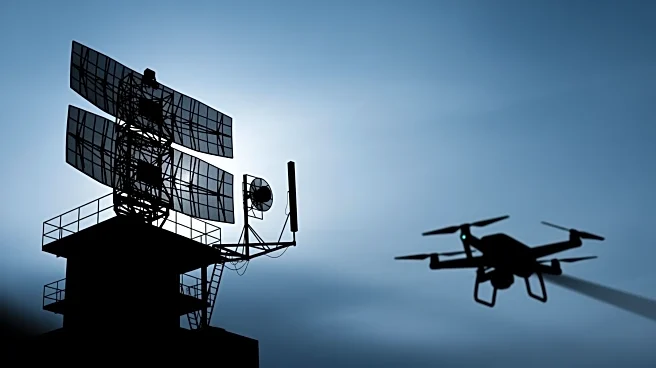
Germany has registered over 1,000 suspicious drone flights in 2025, prompting significant concern among authorities. The head of Germany's Federal Criminal Police Office, Holger Münch, described the situation
as a 'significant situation of danger.' German Chancellor Friedrich Merz has suggested that Russia may be behind many of these drone sightings, although Münch noted that it cannot be confirmed with absolute certainty. The drones have disrupted operations at major airports, including Munich and Berlin Brandenburg, leading to flight cancellations and operational suspensions. Additionally, drones have been spotted over military installations, such as the Gnoien base where Ukrainian soldiers were being trained. In response, Germany has opened a joint counter-drone center in Berlin to coordinate federal and state capabilities for drone defense, and the Bundeswehr has ordered special anti-aircraft tanks to combat drone swarms.
Why It's Important?
The increase in suspicious drone flights poses a threat to national security and public safety in Germany. The disruptions at airports highlight vulnerabilities in air traffic control systems, affecting travelers and potentially leading to economic losses. The suspected involvement of a state actor, possibly Russia, in these drone activities raises geopolitical tensions and underscores the need for robust defense mechanisms. Germany's proactive measures, including the establishment of a counter-drone center and the acquisition of anti-aircraft tanks, reflect the growing importance of drone defense in modern warfare. These developments may influence other nations to enhance their own drone defense strategies, impacting international security policies and defense spending.
What's Next?
Germany is likely to continue strengthening its drone defense capabilities, with potential collaborations with other countries facing similar threats. The joint counter-drone center will play a crucial role in coordinating responses to future incidents, ensuring rapid and effective action. As drone technology evolves, Germany may invest in advanced detection and interception systems to mitigate risks. The international community may also increase scrutiny on drone activities, leading to diplomatic discussions and potential sanctions against state actors involved in unauthorized drone operations.
Beyond the Headlines
The rise in drone sightings in Germany highlights broader implications for privacy and surveillance. As drones become more prevalent, concerns about their use for espionage and data collection grow. Legal frameworks may need to adapt to address these challenges, balancing security needs with individual rights. Additionally, the integration of AI in drone technology raises ethical questions about autonomous decision-making in military contexts. These developments could lead to debates on the regulation of AI-driven warfare and the establishment of international norms governing drone usage.