






What's Happening?
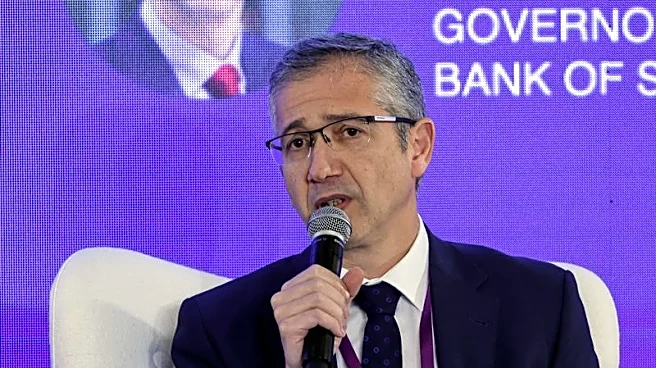
Spain has officially nominated Pablo Hernandez de Cos, the current general manager of the Bank for International Settlements (BIS), to succeed Christine Lagarde as President of the European Central Bank (ECB). This nomination was submitted by Spanish
Deputy Prime Minister and Economy Minister Carlos Cuerpo to Eurogroup President Kyriakos Pierrakakis. De Cos brings nearly three decades of experience in the central banking system, having previously served as the governor of the Bank of Spain from 2018 to 2024. During his tenure as Bank of Spain governor, he chaired the Basel Committee on Banking Supervision and the advisory technical committee of the European Systemic Risk Board. Cuerpo highlighted de Cos's "outstanding knowledge" of economic, fiscal, and monetary policy, his "broad professional experience" in international banking and financial stability, and his reputation for technical rigor and ability to build consensus. The Eurogroup is scheduled to assess the candidates, which also include Klaas Knot from the Netherlands, at its meeting on November 9. The nomination deadline has passed, but political maneuvering could still introduce new contenders.
Why It's Important?
The selection of the next ECB President is a pivotal decision for the Eurozone and has significant implications for global financial markets, including the U.S. The ECB's monetary policy decisions directly influence the strength of the Euro, interest rates, and economic stability across Europe, which in turn affects international trade, investment flows, and the global economic outlook. A leader with de Cos's extensive experience in central banking, particularly his role in chairing the Basel Committee on Banking Supervision, suggests a potential emphasis on financial stability and robust regulatory frameworks. His background indicates a leader who values technical rigor and consensus-building, which could lead to predictable and stable monetary policy, a factor often favored by international investors and U.S. businesses operating in Europe. The choice of ECB President can also signal the future direction of European economic policy, impacting everything from inflation targets to responses to economic crises, thereby influencing the broader global financial landscape.
What's Next?
The Eurogroup is set to assess the nominated candidates, Pablo Hernandez de Cos and Klaas Knot, at its meeting on November 9. This assessment will be a crucial step in the selection process, potentially leading to further discussions and political negotiations among Eurozone member states. While the nomination deadline has passed, the possibility of new contenders emerging due to political maneuvering remains, as seen in past ECB presidential selections. The ultimate decision will involve a complex interplay of national interests, political considerations, and the candidates' qualifications. Once a candidate is chosen, they will face the challenge of navigating the Eurozone's diverse economic landscape, managing inflation, fostering economic growth, and maintaining financial stability amidst ongoing global economic uncertainties. The new president's leadership will shape the ECB's policy direction for years to come.
Beyond the Headlines
The selection of the ECB President goes beyond mere economic policy; it is a significant geopolitical event. The individual chosen will represent the Eurozone on the global stage, influencing international financial diplomacy and cooperation. De Cos's experience with the Basel Committee on Banking Supervision suggests a strong understanding of global financial regulations, which could foster closer collaboration with U.S. financial regulators on international standards. His ability to unite teams and forge consensus, as noted by Cuerpo, will be crucial in managing the diverse perspectives within the ECB's Governing Council and among Eurozone member states. The appointment could also reflect a broader European commitment to technocratic leadership in central banking, prioritizing expertise and stability over political expediency. This choice will not only define the Eurozone's economic future but also its role and influence in the evolving global financial order.