



What's Happening?
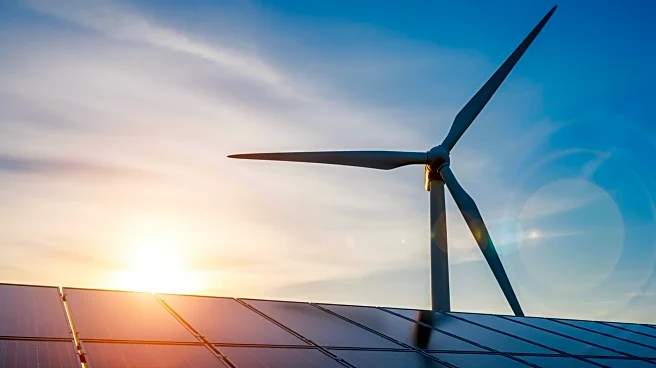
In 2025, global investments in clean energy reached unprecedented levels, with a record $2.2 trillion directed towards the transition from fossil fuels to renewable energy sources such as wind, solar, and battery technologies. This surge in investment is part
of a broader trend of decarbonization, which has accelerated faster than anticipated a decade ago. Despite ongoing challenges, including rising greenhouse gas emissions and insufficient country pledges to curb them, there have been significant advancements. Notably, renewable power capacity has hit new highs, and the cost of batteries has decreased, making them more accessible for various applications. Additionally, artificial intelligence has played a crucial role in enhancing climate research and weather forecasting, contributing to more efficient climate solutions.
Why It's Important?
The increase in clean energy investments is crucial for mitigating the impacts of climate change and transitioning to a sustainable energy future. This shift not only helps reduce reliance on fossil fuels but also supports economic growth by creating new industries and job opportunities. The advancements in renewable energy and battery technology are essential for meeting global electricity demands and achieving international climate goals. Furthermore, the integration of artificial intelligence in climate research and infrastructure management enhances the ability to respond to climate-related challenges, making societies more resilient. These developments indicate progress towards the global goal of tripling clean power by 2030, as set at COP 28 in Dubai.
What's Next?
Looking ahead, the continued expansion of renewable energy capacity and the decline in battery costs are expected to further drive the adoption of clean technologies. Countries and industries will likely increase their investments in climate adaptation and resilience measures, as evidenced by the growing interest in catastrophe bonds and other financial instruments designed to manage climate risks. Additionally, international agreements, such as the High Seas Treaty, will play a pivotal role in protecting marine environments and regulating activities in international waters. As these initiatives progress, they will contribute to a more sustainable and climate-resilient global economy.
Beyond the Headlines
The developments in clean energy and climate adaptation have broader implications for global governance and international cooperation. The International Court of Justice's ruling in favor of climate action highlights the increasing legal pressure on governments to adhere to international climate agreements. This legal framework could empower non-governmental organizations and campaigners to hold countries accountable for their climate commitments. Moreover, the advancements in renewable energy and AI-driven climate solutions underscore the potential for technological innovation to address complex global challenges, fostering a more collaborative and sustainable future.