







What's Happening?
Representative Andre Carson has co-sponsored two significant pieces of legislation aimed at regulating the burgeoning data center industry in the United States: the Responsible Data Center Siting Act and the Data Center Fair Share Act. These bills are part
of a broader four-bill national plan introduced by Congressman Suhas Subramanyam. The Responsible Data Center Siting Act seeks to empower the U.S. Secretary of Energy to establish national best practices for the location of data centers. These guidelines would consider various factors, including energy availability, utility costs, water and electricity consumption, environmental impact, noise pollution, workforce needs, tax revenue, and national security implications. The Data Center Fair Share Act, on the other hand, proposes that data centers and other major electricity consumers bear the full financial burden of grid and power-generation upgrades necessitated by their facilities. This would involve states adopting special tariffs for large electricity users, ensuring that residential consumers are not subsidizing the infrastructure costs associated with data center expansion. States that do not implement these tariffs could face a loss of federal highway funds.
Why It's Important?
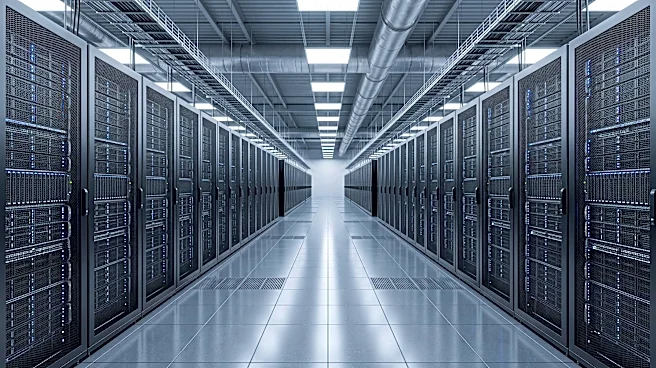
This legislative push is critical due to the rapid expansion of data centers, particularly in regions like Northern Virginia, which has become a global hub for these facilities. While data centers are essential for cloud computing, artificial intelligence, and other digital services, their unchecked growth has raised significant concerns. The current ad hoc approach to data center development has led to increased utility bills for households, the proliferation of transmission lines through communities, and environmental worries related to power demand and water consumption. By requiring data centers to pay for their infrastructure upgrades, the Data Center Fair Share Act aims to protect residential consumers from rising utility costs. The Responsible Data Center Siting Act is important for establishing a more sustainable and community-focused approach to data center placement, mitigating negative impacts on local environments and residents. This legislation seeks to shift the financial and environmental burden from the public to the corporations directly benefiting from these facilities, promoting a more equitable distribution of costs and benefits.
What's Next?
The proposed legislation, including the Responsible Data Center Siting Act and the Data Center Fair Share Act, will proceed through the legislative process in Congress. This will involve committee reviews, potential amendments, and votes in both the House and Senate. If passed, the U.S. Secretary of Energy would be tasked with developing national best practices for data center siting, and states would need to consider adopting special tariffs for large electricity users to avoid losing federal highway funds. The National Institute of Standards and Technology would also be directed to develop technical standards for measuring energy and water consumption by data centers under a related bill, the Data Infrastructure Energy Measurement and Standards Act. Additionally, the federal government would need to formulate a strategy for protecting communities near data centers from foreign or domestic adversaries, as outlined in the Data Infrastructure Risk Reduction Act. The outcome of these legislative efforts will significantly influence the future development and regulation of data centers across the United States.
Beyond the Headlines
Beyond the immediate financial and environmental implications, this legislative initiative touches upon broader themes of corporate responsibility and sustainable development in the digital age. The rapid growth of data centers highlights a tension between technological advancement and community well-being. The proposed acts aim to internalize the external costs of data center operations, ensuring that the entities profiting from these facilities also bear the full cost of their impact. This could set a precedent for how other energy-intensive industries are regulated in the future. Furthermore, the emphasis on national security risks associated with data center infrastructure underscores the evolving nature of critical infrastructure protection in an increasingly digital world. The legislation also implicitly addresses the ethical considerations of resource allocation, particularly concerning water and electricity, in an era of increasing climate concerns. The debate surrounding these bills will likely reflect a broader societal discussion about balancing economic growth, technological innovation, and environmental stewardship.