

What's Happening?
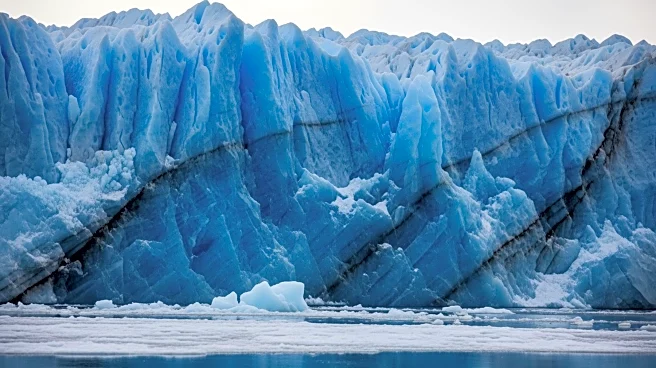
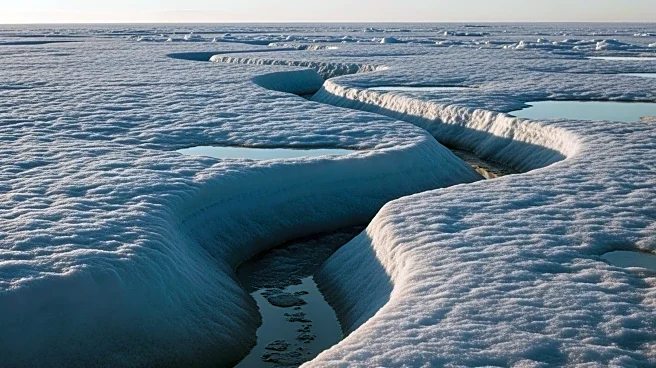
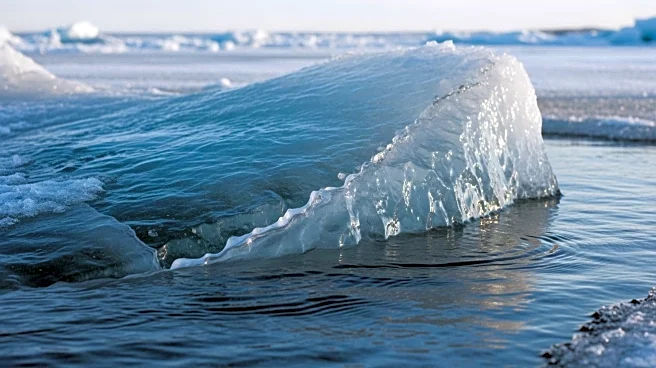
Greenland's largest glacier, Jakobshavn Glacier, is experiencing a significant increase in meltwater runoff, indicating it may be nearing a critical tipping point. According to a study published in Climate of the Past, researchers from Kiel University
and colleagues have reconstructed over a century of freshwater discharge data from the Greenland Ice Sheet into Disko Bay. The findings reveal a sharp acceleration in runoff beginning in the early 2000s, with volumes permanently exceeding historical variability by 2007. This shift suggests the ice sheet is entering a new state characterized by consistently higher meltwater output. The study utilized chemical signals from coralline algae and modeling to extend the record beyond direct measurements, providing a detailed historical context for these changes.
Why It's Important?
The accelerated melting of Jakobshavn Glacier has significant implications for global sea levels and regional climate patterns. As one of the fastest-flowing glaciers, its changes can disproportionately affect local ocean conditions and contribute to global sea level rise. The influx of freshwater into the ocean alters stratification, potentially impacting ocean circulation and marine ecosystems. This process is linked to a slowdown of the Atlantic Meridional Overturning Circulation, which regulates climate across the Northern Hemisphere. The findings underscore the potential for irreversible changes in the Earth's cryosphere, with broader impacts on fisheries, coastal communities, and global climate systems.
What's Next?
While the study does not confirm that a tipping point has been crossed, the sustained acceleration in runoff suggests the Greenland Ice Sheet's response to warming is intensifying. Researchers caution that feedback mechanisms, such as increased absorption of sunlight by darker ice surfaces, could further accelerate melting. Monitoring these changes is crucial for understanding the potential for irreversible shifts in the cryosphere. Continued research and observation will be essential to assess the long-term impacts on global sea levels and climate patterns, as well as to inform policy decisions aimed at mitigating these effects.
Beyond the Headlines
The potential tipping point for Jakobshavn Glacier highlights the broader issue of climate change's impact on polar regions. The study adds to evidence that components of the Earth system may be approaching thresholds beyond which changes become difficult to reverse. This situation raises ethical and policy questions about global responsibility for climate action and the need for international cooperation to address the challenges posed by accelerating ice loss and its global consequences.