


What's Happening?
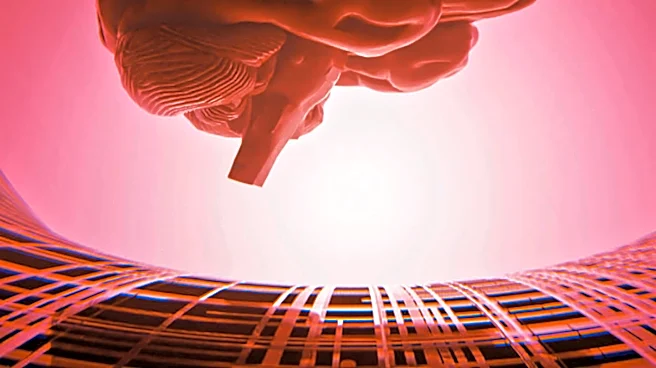
Researchers at the University of Maryland have discovered a dynamic mechanism in the adult brain that regulates learning and skill preservation. The study, published in the Proceedings of the National Academy of Sciences, reveals that the extracellular
matrix (ECM), a scaffold-like structure surrounding brain cells, undergoes rapid remodeling during skill acquisition. This matrix loosens within hours of practice to allow synaptic changes and rebuilds within 24 hours to consolidate learning. The research suggests that as a skill approaches mastery, the ECM's remodeling cycle slows and eventually ceases, effectively sealing neural circuits to protect learned skills. This discovery challenges previous beliefs that the adult ECM is a rigid structure, showing instead that it is a dynamic regulator of brain plasticity.
Why It's Important?
This research has significant implications for understanding adult learning and skill retention. By identifying the ECM as a dynamic regulator, the study opens new avenues for enhancing learning processes and addressing learning plateaus. The findings could lead to improved therapeutic strategies for auditory rehabilitation, particularly for cochlear implant patients who need to train their brains to interpret new signals. Understanding ECM dynamics suggests that patients are more receptive to training immediately after device fitting, before the brain stabilizes. This could revolutionize approaches to auditory training and other learning interventions, potentially allowing for targeted therapies that reopen the learning window when needed.
What's Next?
The research team is now focused on identifying the molecules that trigger ECM changes and exploring the matrix's role in hearing loss and related disorders. They aim to understand the brain's activity during the brief window when the ECM loosens to facilitate learning. This ongoing research could lead to breakthroughs in how learning and memory are managed in adults, with potential applications in various fields, including education and rehabilitation. The long-term goal is to develop methods to temporarily open the ECM, making the learning process more accessible and effective.