






What's Happening?
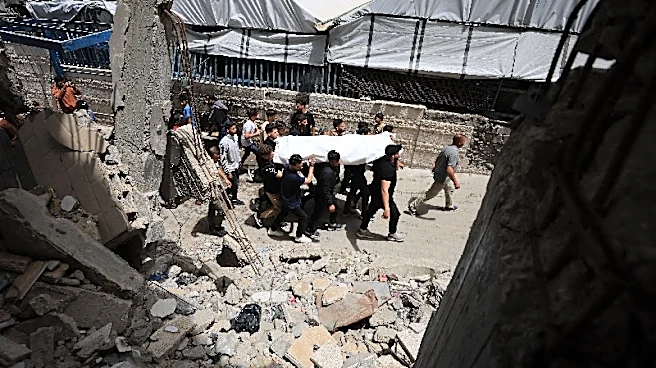
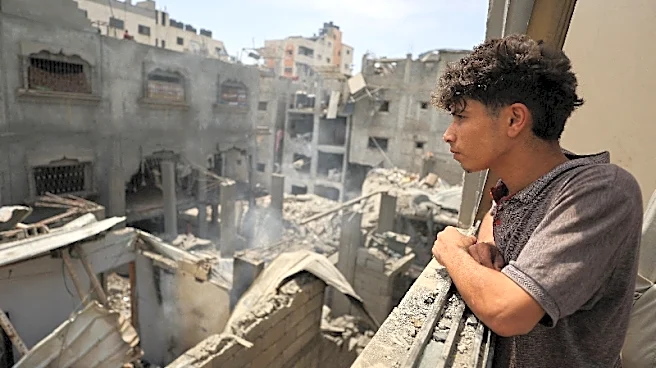
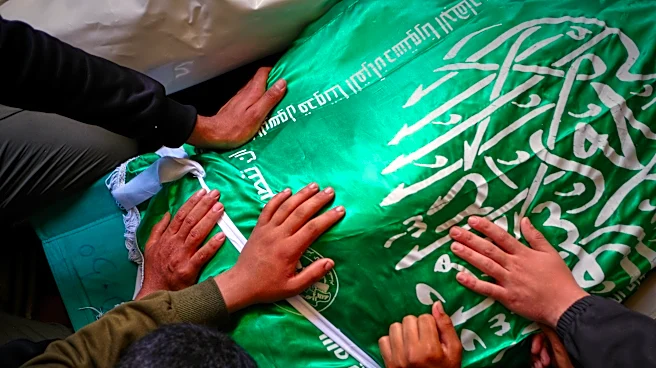
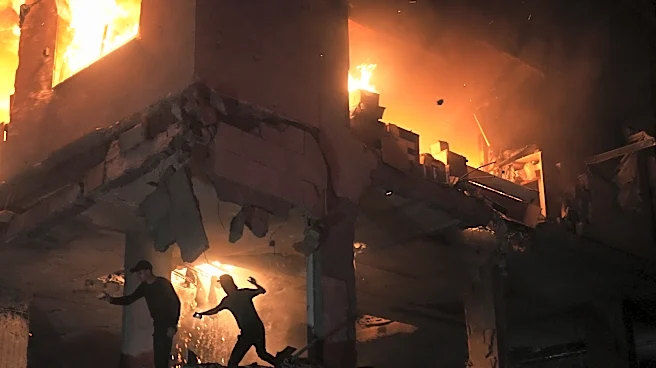
Izz al-Din al-Haddad, a senior Hamas commander involved in planning the October 7 attacks and managing Israeli hostages, was killed in a targeted Israeli strike in Gaza City. The Israel Defense Forces confirmed his death, emphasizing his role in Hamas'
military operations. Despite this tactical success, the broader situation in Gaza remains largely unchanged. Hamas continues to control the region, rebuild its capabilities, and appoint successors to maintain its operations. Reports suggest Mohammed Odeh, head of intelligence in Hamas' military wing, may succeed al-Haddad. The killing highlights ongoing tensions and the complex dynamics between Israel and Hamas, with strategic implications still uncertain.
Why It's Important?
The killing of al-Haddad underscores the persistent conflict between Israel and Hamas, highlighting the challenges in achieving long-term peace and stability in the region. While Israel's targeted assassinations may serve as tactical victories, they do not address the underlying issues in Gaza, where Hamas remains in control and continues to rebuild its military capabilities. The situation poses significant implications for regional security and U.S. foreign policy, as the U.S.-backed Peace Council's efforts to push Hamas toward disarmament have failed. The ongoing conflict affects not only the immediate region but also international relations, as the U.S. administration's stance on the conflict could influence future developments.
What's Next?
The future of the conflict largely depends on the U.S. administration's position, which may not be inclined to push for a decisive end in Gaza. The absence of a political strategy from Israel regarding the governance of Gaza leaves Hamas as the default authority, allowing it to persist and recover. The potential for a return to full-scale conflict remains, with the broader strategic picture unchanged despite ongoing Israeli strikes on Hezbollah targets in Lebanon. The situation in Gaza continues to be a point of contention in international diplomacy, with potential implications for U.S. and Israeli relations with other Middle Eastern countries.
Beyond the Headlines
The killing of al-Haddad serves more as a domestic political narrative for Israel than a strategic change on the ground. The refusal of Hamas to disarm is not new, and the lack of an alternative governance strategy for Gaza perpetuates the cycle of conflict. The situation reflects broader geopolitical dynamics, including the U.S.'s cautious approach to military action in the region and Israel's alignment with U.S. policy. The ongoing tensions highlight the complexities of Middle Eastern politics and the challenges in achieving lasting peace.