








What's Happening?
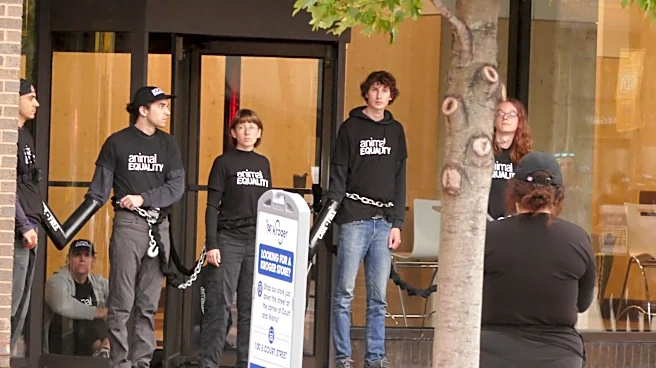
Nine activists from the organization Animal Equality were arrested on September 23 after eight of them chained themselves to the entrance of Kroger’s Cincinnati headquarters. This action escalated months of demonstrations by Animal Equality, which has
been protesting Kroger’s cage-free egg policy since May. Nearly 70 activists gathered outside the headquarters. Kroger had committed in 2016 to exclusively sell cage-free eggs by 2025, a commitment reaffirmed in 2018. However, in 2022, the company announced it would not meet this goal, citing that customer demand continued to outpace the supply of cage-free eggs. The arrested activists face charges ranging from criminal trespassing to resisting arrest, according to Cincinnati Interim Police Chief Adam Hennie. Police and fire personnel used bolt cutters and saws to free the activists from the entrance.
Why It's Important?
This protest highlights the ongoing tension between corporate sustainability commitments and market realities, as well as the use of civil disobedience in animal welfare advocacy. Kroger, as a major retailer, faces pressure from animal rights groups to uphold its 2016 pledge to transition to 100% cage-free eggs. The company's decision to backtrack on its commitment, citing supply and demand issues, underscores the complexities of implementing large-scale changes in agricultural practices and supply chains. For Animal Equality, the arrests and the high-profile nature of the protest serve to draw public attention to the issue of hen welfare in the egg industry. The incident also raises questions about the effectiveness and public perception of extreme protest tactics in achieving advocacy goals, as noted by Xavier University professor Mack Mariani, who suggests such actions generate headlines but don't always translate into public support.
What's Next?
Animal Equality president Sharon Núñez stated that the decision to risk arrest came after months of unsuccessful attempts to secure a meeting with Kroger representatives who have the authority to discuss ending the use of cages for hens. The organization's immediate goal remains to engage in direct dialogue with Kroger's decision-makers. Kroger has indicated it respects peaceful protest but objects to tactics that create safety concerns, and it is cooperating with local law enforcement. The activists involved will likely face legal proceedings related to their arrests. The broader movement for cage-free eggs will continue to monitor Kroger's policies and potentially target other retailers with similar commitments. The incident may also prompt Kroger to re-evaluate its communication strategy regarding its cage-free egg policy and its engagement with advocacy groups.
Beyond the Headlines
The incident at Kroger's headquarters reflects a broader societal debate about animal welfare, corporate responsibility, and the ethics of food production. The use of civil disobedience by Animal Equality underscores a growing trend of activists employing more direct and disruptive methods to force corporate and public attention on their causes. This approach, while effective in generating media coverage, also carries the risk of alienating potential supporters if the tactics are perceived as too extreme. The situation also highlights the economic challenges and logistical hurdles companies face when attempting to transition to more ethical sourcing practices, especially when consumer demand and supply chain capabilities are not fully aligned. The long-term impact will depend on whether such protests can genuinely influence corporate policy or if they primarily serve to raise awareness without leading to substantive change.