




What's Happening?
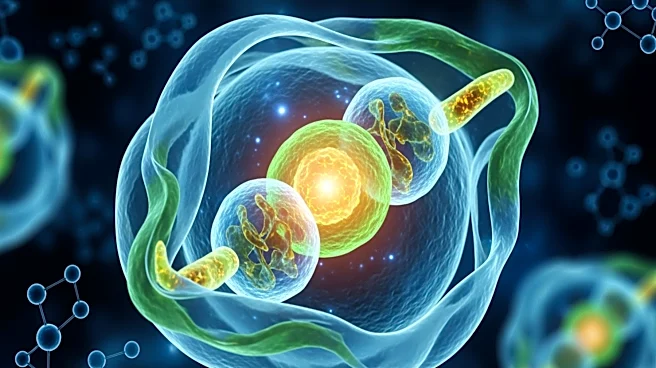
Recent research has uncovered that mitochondria, traditionally known as the powerhouses of cells, can also form new organelles during infections. This discovery was made by a team led by Lena Pernas at the University of California, Los Angeles. The study
found that when cells are invaded by the parasite Toxoplasma gondii, mitochondria shed their outer layers to create new cellular compartments, or organelles, which digest molecular waste. This process appears to aid the parasite's proliferation, although the exact mechanism remains unclear. The findings, presented at a Keystone symposium and published on bioRxiv, suggest that mitochondria play a significant role in immune responses and may have contributed to the evolution of eukaryotic cells by giving rise to organelles.
Why It's Important?
This discovery adds a new dimension to our understanding of cellular biology and the role of mitochondria beyond energy production. It highlights the potential for mitochondria to influence immune responses and cellular evolution. The ability of mitochondria to form new organelles could provide insights into how early eukaryotic cells developed complex structures. This research may also have implications for understanding diseases where mitochondrial function is disrupted, offering new avenues for therapeutic interventions. The study underscores the complexity of cellular processes and the potential for mitochondria to impact health and disease.