




What's Happening?
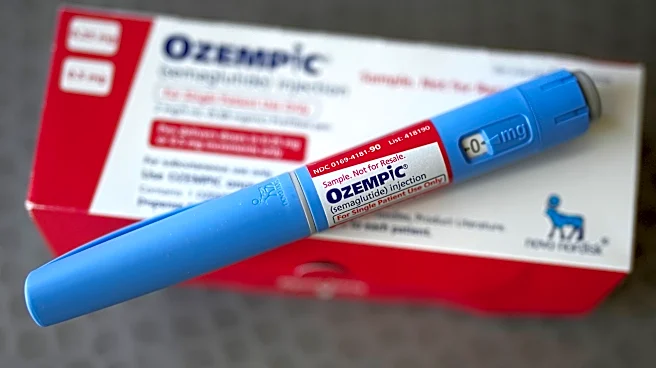
The U.S. Food and Drug Administration (FDA) has mandated that manufacturers of GLP-1 receptor agonist (GLP-1 RA) medications, including popular drugs like Ozempic, Wegovy, Mounjaro, and Zepbound, add information about a potential increased risk of non-arteritic
anterior ischemic optic neuropathy (NAION) to the Warnings and Precautions section of their labeling. This decision, announced on Monday, November 9, 2026, follows an FDA assessment that included 126 clinical trials involving over 134,000 patients, animal data, real-world data, and published observational studies. NAION is a serious eye condition characterized by sudden, painless vision loss, which can be permanent and currently has no proven treatments. While FDA scientists could not identify a specific mechanism linking GLP-1 drugs to NAION, the agency concluded that the potential increased risk warranted additional warnings across the drug class.
Why It's Important?
This new warning impacts a widely used class of medications for type 2 diabetes and obesity, affecting millions of patients in the U.S. The inclusion of NAION risk information on drug labels means that healthcare providers and patients will need to be more vigilant about potential vision changes. NAION is the second most common optic nerve disease in the U.S. among individuals over 50, and its risk factors, such as type 2 diabetes, sleep apnea, and hypertension, often overlap with conditions treated by GLP-1 drugs. The FDA's action underscores the ongoing scrutiny of side effects for widely prescribed medications, especially as real-world usage can reveal adverse events not fully observed in initial clinical trials. This move could lead to increased patient counseling, monitoring, and potentially influence prescribing patterns for GLP-1 RAs.
What's Next?
Manufacturers of GLP-1 RA medications are now required to update their product labeling to include the NAION risk. Patients currently taking these medications should be informed by their healthcare providers about the potential risk and advised to seek immediate medical attention if they experience sudden vision changes. The FDA will continue to monitor adverse event reports related to GLP-1 RAs. This regulatory action may also prompt further research into the potential mechanisms linking GLP-1 drugs to NAION and could lead to additional safety communications or labeling changes in the future. Both Novo Nordisk and Eli Lilly, major manufacturers of GLP-1 drugs, have stated that patient safety is their top priority and are aware of studies on the potential link.
Beyond the Headlines
The FDA's decision highlights the complexities of drug safety monitoring, particularly for medications that gain widespread use. While GLP-1 drugs have demonstrated significant benefits for weight loss and diabetes management, the emergence of rare but serious side effects like NAION necessitates continuous post-market surveillance. The inability of FDA scientists to identify a clear mechanism for the link between GLP-1 drugs and NAION suggests that the interaction might be subtle or involve complex physiological pathways. This situation also reflects a broader trend in pharmacovigilance, where real-world data and observational studies play a crucial role in identifying risks that may not be apparent in controlled clinical trials. The European Medicines Agency had previously noted a similar potential risk, indicating a global focus on this issue.