

What's Happening?
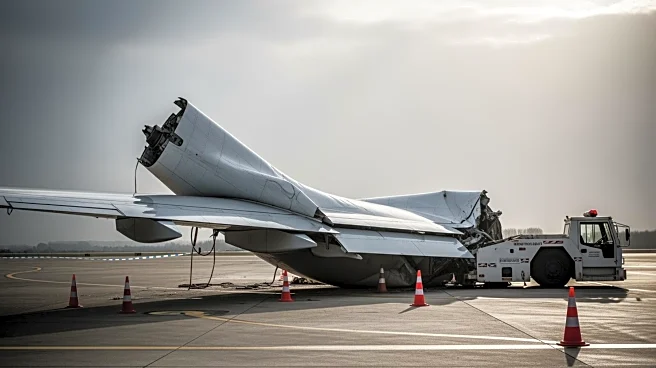
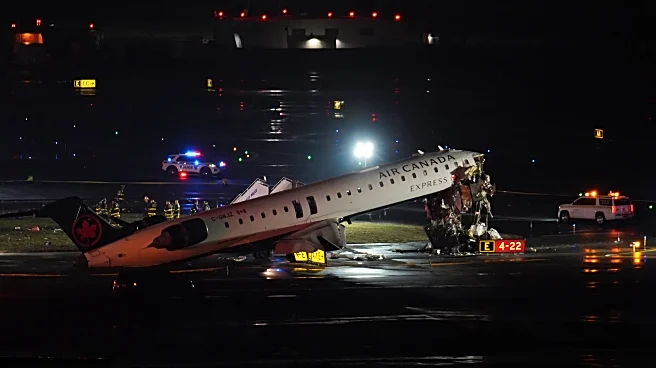
A tragic incident occurred at New York's LaGuardia Airport when an Air Canada passenger plane collided with a fire truck, resulting in the deaths of the pilot and co-pilot. The collision happened late at night, and the details of the incident are currently
under investigation. According to sources familiar with the situation, the crash led to significant damage to the aircraft, and emergency services were promptly deployed to the scene. The airport authorities are working closely with the National Transportation Safety Board (NTSB) to determine the cause of the collision. This incident has raised concerns about airport safety protocols and the coordination between ground vehicles and aircraft.
Why It's Important?
The collision at LaGuardia Airport highlights critical issues regarding airport safety and operational protocols. The deaths of the pilot and co-pilot underscore the potential risks involved in airport operations, particularly in busy hubs like LaGuardia. This incident could lead to increased scrutiny of safety measures and possibly result in changes to how ground vehicles and aircraft interact on the tarmac. The aviation industry, already under pressure from various challenges, may face additional regulatory reviews and potential policy changes to prevent similar incidents in the future. The impact on Air Canada and its operations could also be significant, affecting its reputation and operational procedures.
What's Next?
As investigations continue, the NTSB will likely release a preliminary report outlining the initial findings of the collision. This report could lead to recommendations for improving safety protocols at airports nationwide. Stakeholders, including airline companies, airport authorities, and regulatory bodies, may convene to discuss and implement measures to enhance safety and prevent future incidents. The families of the deceased may also seek legal recourse, which could result in further legal and financial implications for the parties involved.