







What's Happening?
Researchers have discovered a katydid species capable of changing its color from bright pink to green, a transformation that occurs over approximately two weeks. This finding was made at the Smithsonian Tropical Research Institute's field station on Barro
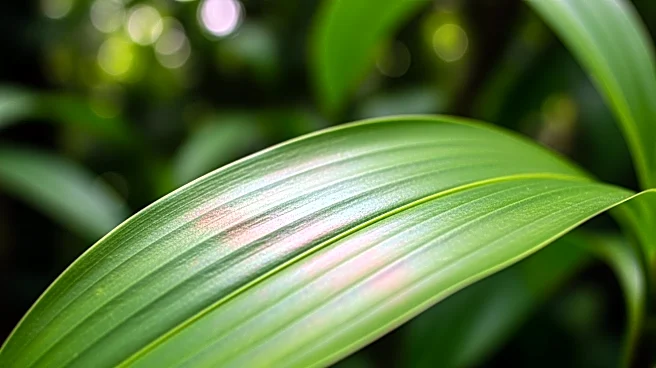
Colorado Island in Panama. The katydid, known as arota festae, mimics the color changes of young rainforest leaves, which often start pink before turning green. This adaptation is believed to be a survival strategy, allowing the insect to blend into its environment and avoid predators. The study, involving institutions like the University of St Andrews and the University of Reading, suggests this color shift is linked to a natural process called 'delayed greening.'
Why It's Important?
This discovery highlights the intricate adaptations of rainforest species to their complex environments. The ability of the katydid to change color for camouflage demonstrates a sophisticated evolutionary strategy to evade predators. Such findings enhance our understanding of biodiversity and the ecological dynamics of tropical forests. This research could have broader implications for studying other species with similar adaptive traits, potentially informing conservation strategies. The study also challenges previous assumptions about pink katydids being rare mutations, instead suggesting a deliberate survival mechanism.
Beyond the Headlines
The discovery of the color-changing katydid underscores the importance of preserving rainforest ecosystems, which are home to countless unique species with specialized adaptations. This research may prompt further studies into the genetic and environmental factors driving such transformations. Additionally, understanding these mechanisms could inspire biomimicry applications in technology and design, where adaptive camouflage is of interest. The study also raises questions about the impact of environmental changes on these adaptive traits and the potential consequences for species survival.