


What's Happening?
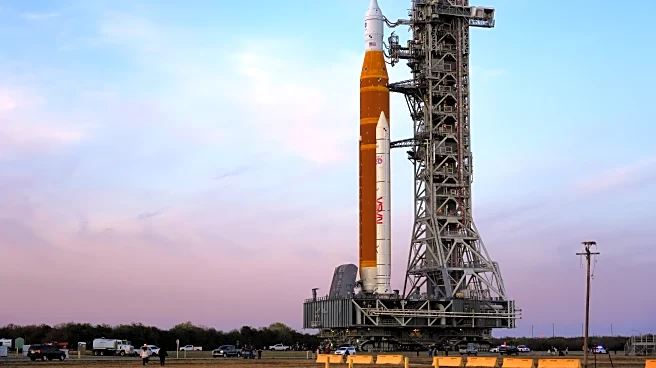
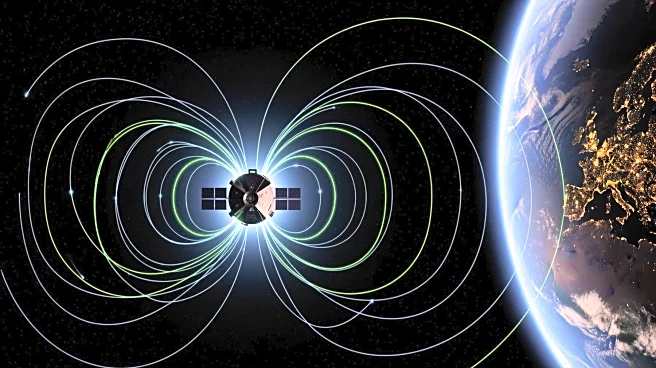
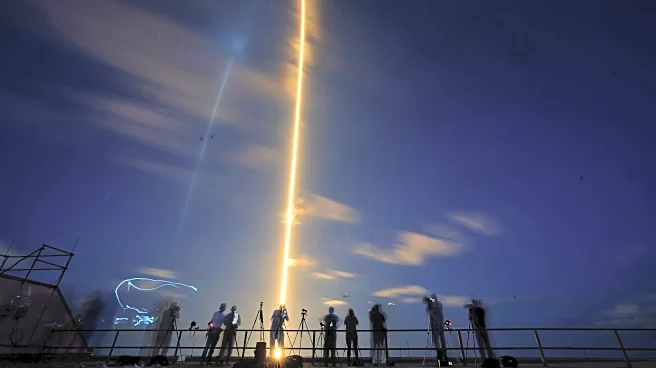
On March 12, 2015, NASA launched the Magnetospheric Multiscale Mission (MMS), consisting of four satellites designed to study magnetic reconnection in Earth's magnetic field. This phenomenon occurs when the planet's magnetic field lines break apart and
reconnect, releasing significant energy and affecting the atmosphere. The mission's satellites fly in a tetrahedral formation, allowing for three-dimensional observation of these events. The MMS has already made the first direct detection of magnetic reconnection, contributing to the understanding of this complex process.
Why It's Important?
The Magnetospheric Multiscale Mission is crucial for advancing scientific knowledge about Earth's magnetic environment and its interactions with solar plasma. Understanding magnetic reconnection is vital for predicting space weather events that can impact satellite operations, communication systems, and power grids on Earth. The mission's findings could lead to improved forecasting of geomagnetic storms, thereby enhancing the protection of technological infrastructure and reducing economic risks associated with space weather disruptions.
What's Next?
As the mission continues, scientists expect to gather more data on magnetic reconnection, potentially leading to breakthroughs in space weather prediction. The ongoing analysis of MMS data will likely influence future satellite missions and research initiatives aimed at exploring Earth's magnetosphere and its interactions with solar activity. Collaboration with international space agencies and research institutions may also expand as the mission progresses, fostering a global effort to understand and mitigate the effects of space weather.