





What's Happening?
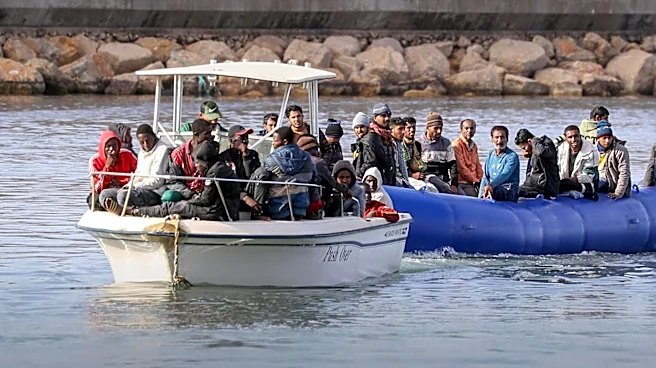
The U.S. Department of War is evaluating the expansion of autonomous surveillance boats, often described as canoe-sized drones, for use on the Rio Grande and in the Gulf of America. This consideration follows a successful pilot program initiated in January,
where these unmanned surface vessels (USVs) reportedly aided authorities in deterring illegal border crossings and narcotics trafficking. These USVs, manufactured by San Diego-based startup Seasats, are designed to patrol waters for extended periods without human crews. The Lightfish model, a 3-meter, 154-kilogram vessel, costs approximately $240,000 and can operate for months in challenging sea conditions. It is equipped with electro-optical, infrared, and sonar sensors that transmit real-time tracking data to military software networks, including Palantir Technologies’ Maven Smart System and Anduril Industries’ Fortress platform, alerting Customs and Border Protection and Coast Guard units. According to the Pentagon, these drones have assisted in an average of 452 detections, 350 apprehensions, and 100 turnbacks per month.
Why It's Important?
This potential expansion signifies a growing trend within U.S. military and law enforcement agencies to adopt cost-effective, autonomous systems for surveillance and security operations. The initiative highlights a shift in defense procurement, favoring agile, venture-backed startups over traditional contractors for deploying emerging technologies rapidly and affordably. The use of these drones aims to alleviate the strain on Coast Guard cutters and crewed aircraft currently patrolling the U.S.-Mexico border as part of President Trump’s immigration enforcement efforts. M. Roosevelt Ditlevson, assistant secretary of defense for Homeland Defense and Americas Security Affairs, emphasized that maritime drones offer "cost-effective solutions to interdict and put people in these areas that narco traffickers are now moving towards." The success of small drones in conflicts like the Ukraine war has further encouraged their proliferation across the U.S. military, demonstrating their effectiveness in persistent coverage that traditional, fuel-heavy assets cannot match.
What's Next?
If the pilot program's success continues, officials are considering increasing the robotic fleet from its current test group of 10 vessels by as many as 50. This expansion could also see the drones operating in the Gulf of America, potentially forming a radar fence between Texas and Key West, Florida. However, M. Roosevelt Ditlevson indicated that the expansion would occur incrementally. The Department of War remains open to various vendors, prioritizing the best available technology, with companies like Saronic, Saildrone, and Splash also providing similar marine drones. The expanded use in the Gulf of America is also seen as a precursor to testing these vessels in the more challenging conditions of the Pacific Ocean near San Diego, suggesting a broader future application for these autonomous systems in maritime security.
Beyond the Headlines
The deployment of autonomous surveillance boats raises broader implications concerning the future of border security and maritime defense. The reliance on AI-powered systems for detection and interdiction introduces questions about algorithmic bias, data privacy, and the potential for mission creep. While proponents highlight efficiency and cost-effectiveness, critics may raise concerns about the dehumanization of border enforcement and the ethical considerations of using unmanned systems in sensitive humanitarian contexts. Furthermore, the shift towards smaller, more agile defense startups could disrupt the traditional defense industry landscape, fostering innovation but also potentially creating new challenges in oversight and accountability for these rapidly evolving technologies. The long-term impact on human-led patrol operations and the effectiveness of deterrence strategies will also be closely watched.