






What's Happening?
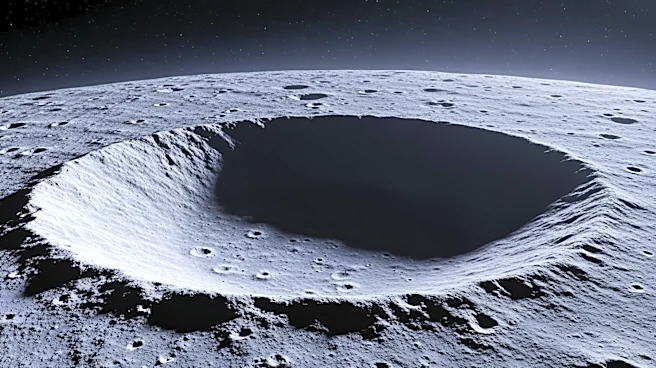
A new study suggests that the South Pole–Aitken (SPA) basin, the moon's largest impact crater, was likely created by a differentiated asteroid. This finding could have significant implications for future lunar exploration, as NASA's Artemis astronauts
are expected to land near the lunar south pole, where material from the SPA basin may be present. The study, led by researchers from Purdue University, used high-resolution 3D simulations to determine that the SPA's distinctive shape was caused by a 160-mile-wide asteroid with a dense iron core. This impact likely scattered deep lunar material near the south pole, offering a unique opportunity for scientific discovery.
Why It's Important?
The discovery of the SPA basin's origins is crucial for understanding the moon's geological history and evolution. By landing near the SPA basin, Artemis astronauts could collect samples that provide insights into the moon's deep interior and its formation over 4 billion years ago. This mission could also help answer longstanding questions about the moon's impact history and the processes that shaped its surface. The findings could inform future lunar exploration strategies and enhance our understanding of planetary formation, potentially influencing how we search for similar impact structures on other celestial bodies.
What's Next?
NASA's Artemis program plans to send astronauts to the moon's south pole, where they may encounter material from the SPA basin. If successful, the mission could yield valuable samples that help determine the age and composition of the moon's interior. These findings could guide future lunar missions and inform the development of technologies for exploring other planets. As NASA continues to refine its Artemis mission plans, the potential for groundbreaking discoveries at the SPA basin underscores the importance of continued investment in lunar exploration.