

What's Happening?
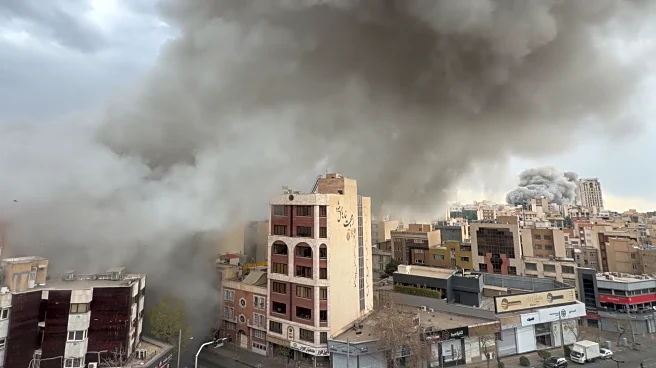
Recent satellite images and reports indicate that U.S. and Israeli forces have been actively targeting Iranian missile facilities, particularly those located in underground bunkers referred to as 'missile cities.' These facilities, designed to protect
Iran's missile arsenal, are now being struck as soon as launchers emerge from tunnels. The strikes have reportedly destroyed several launchers and damaged entrances to these underground sites, potentially trapping weapons inside. The U.S. Central Command has noted a significant reduction in Iranian missile launches, with a reported 86% decrease in activity. This military campaign is part of a broader effort to degrade Iran's missile capabilities, which have been used to target U.S. bases and other sites in the region.
Why It's Important?
The ongoing military operations by the U.S. and Israel against Iran's missile infrastructure are significant for several reasons. Firstly, they represent a strategic effort to neutralize a key component of Iran's military power, which has been a longstanding concern for both nations. The reduction in Iran's missile launch capabilities could decrease the immediate threat to U.S. and allied forces in the region, potentially altering the balance of power. Additionally, these actions may influence Iran's military strategy and its ability to project power in the Middle East. The strikes also highlight the effectiveness of intelligence and surveillance operations in identifying and targeting critical military assets, which could have broader implications for future conflicts.
What's Next?
As the U.S. and Israel continue their operations, it is likely that Iran will seek to adapt its strategies to protect its remaining missile capabilities. This could involve relocating assets, enhancing defensive measures, or seeking diplomatic avenues to de-escalate tensions. The international community may also respond, with potential calls for restraint or negotiations to prevent further escalation. Additionally, the effectiveness of these strikes may prompt other nations to reassess their own military strategies and defense postures in the face of similar threats.
Beyond the Headlines
The targeting of Iran's missile facilities raises questions about the long-term viability of underground bunkers as a defensive strategy. The ability of modern military technology to penetrate and neutralize such defenses could lead to a reevaluation of military infrastructure investments worldwide. Furthermore, the situation underscores the importance of international diplomacy in addressing regional security concerns, as military actions alone may not resolve underlying tensions. The ethical implications of preemptive strikes and their impact on civilian populations and regional stability are also critical considerations.