






What's Happening?
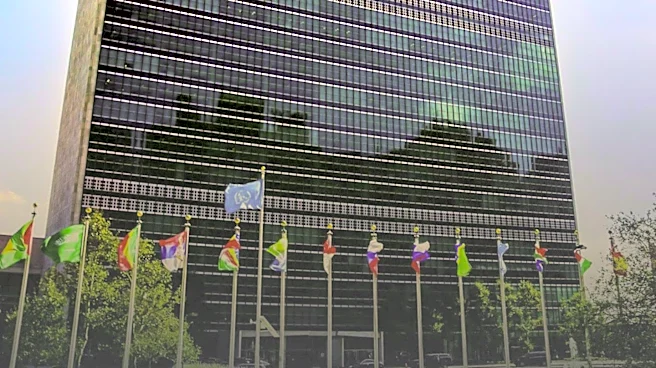
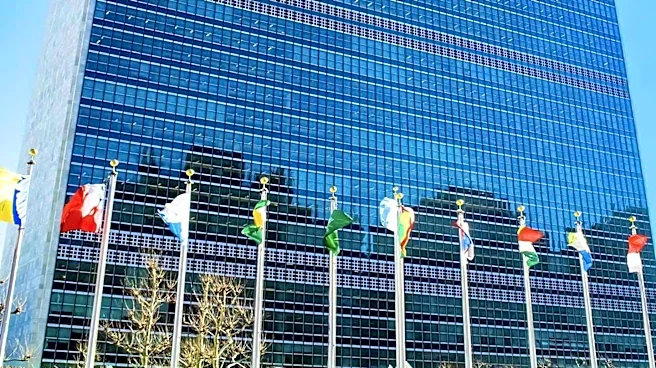
France is actively participating in discussions regarding the reform of the United Nations system, specifically within the framework of UN80. Together with Germany, France has put forth concrete proposals aimed at enhancing the efficiency of the First
Committee of the UN General Assembly. These proposals include reducing the time allocated for statements, limiting the number of resolutions to only those introducing substantive changes, and decreasing the number of segments and the overall duration of the First Committee's sessions. France also expressed concern over the financial instability of disarmament forums, noting that partial or late payments of national contributions jeopardize the sustainability of disarmament conventions. The country reiterated its long-standing support for the United Nations Institute for Disarmament Research (UNIDIR), emphasizing the importance of preserving its autonomy to foster collective expertise in disarmament.
Why It's Important?
The proposed reforms by France and Germany for the UN General Assembly's First Committee are significant for the U.S. and the international community as they aim to streamline global disarmament discussions. A more efficient First Committee could lead to more productive negotiations on critical issues like the Fissile Material Cut-off Treaty (FMCT), which has been stalled due to procedural deadlocks. The U.S., as a major global power and a key player in disarmament efforts, stands to benefit from a more functional and responsive UN disarmament framework. The financial fragility of disarmament forums, highlighted by France, also poses a risk to the continuity of international arms control agreements, which are vital for global security and stability. Ensuring the sustainability of these forums and the autonomy of institutions like UNIDIR is crucial for maintaining a robust international dialogue on disarmament, directly impacting U.S. national security interests and its role in global non-proliferation efforts.
What's Next?
The discussions on the reform of the United Nations system, including the proposals for the First Committee, are ongoing within the UN80 framework. Member states will likely continue to debate these and other proposals to improve the UN's operational efficiency. The focus will be on achieving consensus on measures that can address the current procedural deadlocks and financial vulnerabilities affecting disarmament forums. The international community, including the U.S., will need to engage constructively in these discussions to shape the future of UN disarmament efforts. Furthermore, there will be continued pressure to launch negotiations on critical issues like the Fissile Material Cut-off Treaty, which France views as the most ripe for discussion. The financial health of disarmament conventions will also remain a key concern, requiring member states to ensure timely and full contributions to prevent further jeopardizing their sustainability.
Beyond the Headlines
The push for UN reform, particularly in disarmament committees, reflects a broader recognition of the need for international institutions to adapt to contemporary global challenges. The procedural paralysis and financial instability highlighted by France underscore systemic issues within multilateral diplomacy. Beyond the immediate efficiency gains, these reforms could influence the perceived legitimacy and effectiveness of the UN in addressing complex global security threats. For the U.S., a more agile and effective UN could offer a more reliable platform for advancing its foreign policy objectives, particularly in arms control and non-proliferation. Conversely, continued stagnation could lead to a decline in the UN's relevance, potentially prompting nations to seek alternative, less inclusive forums for addressing critical security concerns. The emphasis on UNIDIR's autonomy also points to the importance of independent research and expertise in informing policy decisions, a principle that underpins effective governance in international relations.