





What's Happening?
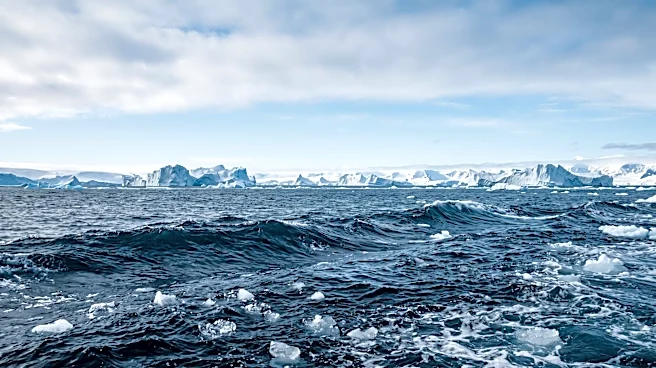
International negotiations aimed at enhancing environmental protection in Antarctica's Southern Ocean have concluded without a significant conservation agreement. The annual meeting of the Commission for the Conservation of Antarctic Marine Living Resources
(CCAMLR), held in Hobart, Tasmania, failed to reach a consensus on establishing new marine protected areas or implementing revised measures for managing commercial krill fishing. This marks the tenth consecutive year without the designation of a new marine protected area under CCAMLR, an organization that operates through consensus, meaning a single member's opposition can prevent a conservation measure from being adopted. Conservation groups express concern that concentrated fishing activity could intensify pressure on wildlife feeding grounds. Despite the lack of immediate agreement, participating nations have committed to continuing discussions between annual meetings, with a focus on the proposed Antarctic Peninsula marine protected area and improvements to krill fishery management, aiming for potential progress in 2027.
Why It's Important?
The ongoing stalemate in Antarctic conservation efforts carries significant implications for global biodiversity and the health of the Southern Ocean ecosystem. Krill, small crustaceans, are a foundational component of this ecosystem, serving as a primary food source for whales, penguins, seals, and seabirds. The failure to establish new marine protected areas and regulate krill fishing more effectively leaves these vulnerable species and their habitats exposed to increased anthropogenic pressures. The lack of consensus also undermines broader international commitments, such as the goal to protect at least 30% of the world's oceans by 2030. For the U.S. and other nations with interests in Antarctic research, tourism, and environmental stewardship, the absence of robust protections could lead to long-term ecological degradation, impacting scientific study opportunities and the sustainability of expedition cruise industries that rely on healthy marine environments. The current decision-making framework of CCAMLR, requiring unanimous consent, highlights a persistent challenge in international environmental governance, where the interests of individual nations can impede collective conservation goals.
What's Next?
While the recent CCAMLR meeting did not yield immediate breakthroughs, members have agreed to continue intersessional discussions, specifically targeting the proposed Antarctic Peninsula marine protected area and improvements to krill fishery management. This commitment offers a pathway for potential progress in 2027, when the next annual meeting is scheduled. Conservation organizations are advocating for stronger political engagement to overcome existing disagreements. The focus will be on developing a revised management framework for krill fishing that aims to distribute fishing activity more carefully and mitigate ecological risks. Additionally, the ongoing international commitment to protect a significant portion of the world's oceans by 2030 will exert continued pressure on CCAMLR members to translate diplomatic momentum into binding conservation decisions. The success of these future negotiations will depend on the ability of member states to find common ground and prioritize long-term ecological health over short-term economic or political considerations.
Beyond the Headlines
The decade-long inability to establish new marine protected areas in the Southern Ocean underscores a deeper challenge in international environmental policy: balancing economic interests with ecological preservation. The commercial krill fishery, while providing products like omega-3 supplements and farmed salmon feed, directly competes with the dietary needs of Antarctic wildlife. This conflict highlights the ethical dilemma of exploiting a critical food source in a fragile ecosystem. The consensus-based decision-making model of CCAMLR, while intended to ensure broad agreement, has inadvertently created a mechanism for perpetual deadlock, allowing the objections of a single member to halt significant conservation initiatives. This situation raises questions about the efficacy of current international governance structures in addressing urgent environmental crises. The long-term implications could include not only localized ecosystem collapse but also broader shifts in ocean health, potentially affecting global climate regulation and marine biodiversity far beyond the Antarctic region.