



What's Happening?
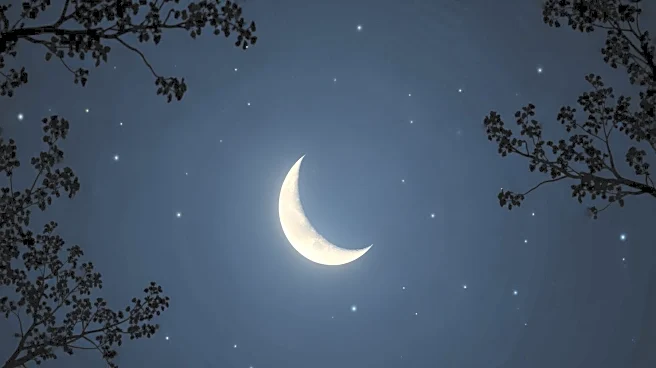
On January 21, 2026, the moon is in its waxing crescent phase, with approximately 9% of its surface illuminated over New York. This phase follows the new moon that occurred on January 18 and precedes the first quarter moon set for January 25. The waxing crescent phase is characterized
by a thin sliver of the moon being visible, which results in darker skies that are ideal for stargazing. The crescent will be visible low in the western sky after sunset and will pass by Saturn on January 22 and 23. This phase is part of the moon's 29.5-day cycle, during which it transitions through eight distinct phases. The U.S. Naval Observatory and other sources have noted the rapid changes in the moon's appearance during this period.
Why It's Important?
The waxing crescent phase is significant for astronomers and night-sky enthusiasts as it provides optimal conditions for observing faint stars and celestial events. The darker skies during this phase allow for better visibility of stars and planets, making it a prime time for astrophotography and amateur astronomy. Additionally, the moon's position relative to Earth and the sun during this phase can affect tidal patterns, known as spring tides, which have implications for coastal regions. Understanding the moon's phases is crucial for planning astronomical observations and for those interested in the natural rhythms of the night sky.
What's Next?
As the moon continues its cycle, it will transition to the first quarter phase on January 25, offering different viewing opportunities. Stargazers can look forward to observing the moon's interaction with Saturn in the coming days. The changing phases of the moon will continue to influence tidal patterns and provide varying conditions for night-sky observations. Enthusiasts are encouraged to take advantage of the current waxing crescent phase for optimal stargazing conditions.