


What's Happening?
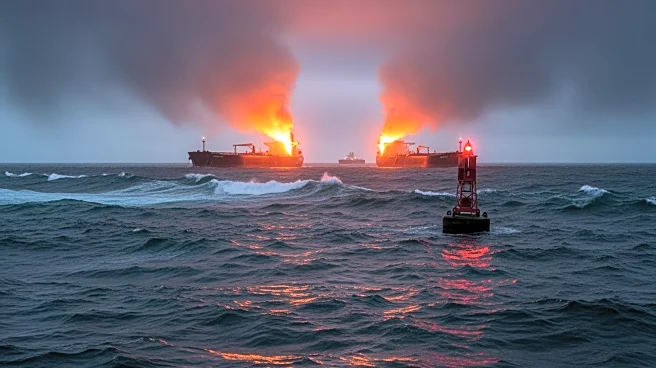
The United States and Israel have initiated major military operations against Iran, leading to significant geopolitical tensions and economic repercussions. The Strait of Hormuz, a critical chokepoint for global oil trade, has been effectively blocked,
preventing the passage of up to 15 million barrels of oil per day. This has caused oil prices to surge, with potential increases from $67 to $100 per barrel. The conflict has raised concerns about a global economic downturn, as many developed economies, including the US, are already struggling with inflation and productivity issues. The situation remains tense, with Iran's Revolutionary Guards warning against the passage of ships through the strait.
Why It's Important?
The Strait of Hormuz is a vital artery for global oil supplies, and its closure could have severe implications for the global economy. A significant rise in oil prices could exacerbate existing economic challenges, including inflation and cost of living crises in developed countries. The conflict underscores the strategic importance of the region and the potential for geopolitical tensions to disrupt global energy markets. The situation also highlights the interconnectedness of global economies and the potential for regional conflicts to have far-reaching economic impacts.
What's Next?
The military conflict is expected to continue, with potential for further escalation. The global community is closely monitoring the situation, with calls for de-escalation to prevent further economic disruption. The potential for prolonged conflict raises concerns about sustained high oil prices and their impact on global economic stability. Analysts are watching for any signs of diplomatic efforts to resolve the situation and restore stability to the region.