








What's Happening?
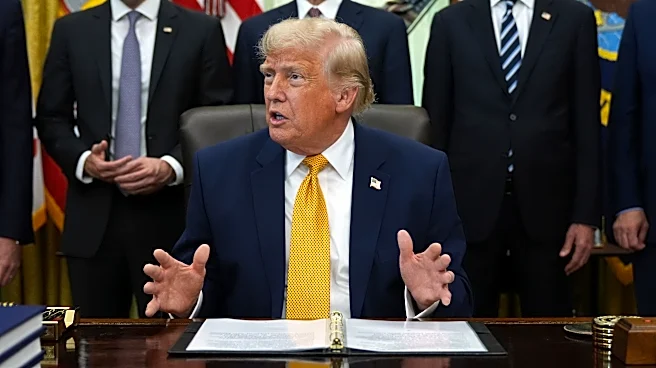
The Trump administration has proposed a significant increase in the fees for U.S. citizenship applications, raising them by $570. The proposed regulation by U.S. Citizenship and Immigration Services (USCIS) would increase fees for paper applications from
$760 to $1,330 and for online filings from $710 to $1,280. The plan also seeks to eliminate fee waivers and reductions for low-income applicants, although exemptions for service members would remain. The Department of Homeland Security (DHS) argues that the fee hikes are necessary to fully subsidize the processing of applications, especially given the administration's efforts to scrutinize applicants more heavily. The proposal is part of a broader strategy to tighten access to legal immigration benefits.
Why It's Important?
The proposed fee increase could create additional barriers for legal immigrants seeking U.S. citizenship, potentially affecting thousands of applicants. By eliminating fee waivers and reductions, the policy may disproportionately impact low-income immigrants, making it more challenging for them to afford the naturalization process. This move aligns with the Trump administration's broader immigration policy, which has focused on restricting access to legal immigration benefits. The changes could lead to a decrease in naturalization rates, affecting the demographic composition of the U.S. and potentially influencing future electoral outcomes.
What's Next?
The proposed changes are subject to a 60-day public comment period, during which individuals and organizations can express support or opposition. The feedback received could influence the final decision on the regulation. If implemented, the fee increases could prompt legal challenges from immigrant advocacy groups. The administration's continued focus on immigration policy may lead to further regulatory changes, impacting the broader immigration landscape in the U.S.