



What's Happening?
Newark Liberty International Airport experienced a temporary shutdown on Wednesday evening following an 'aircraft emergency' involving a JetBlue flight. The incident, which occurred around 6 p.m., led to the grounding of all flights for approximately
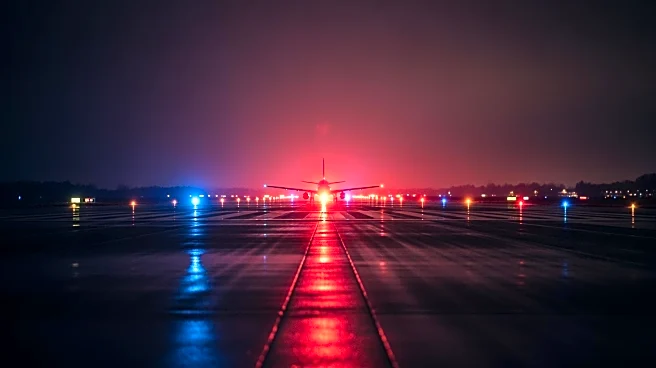
an hour. The Federal Aviation Administration (FAA) reported that the emergency was due to an engine failure on JetBlue Flight 543, which was en route to West Palm Beach, Florida. The aircraft had to return to Newark shortly after takeoff, landing safely back on the tarmac. Passengers were evacuated via slides after smoke was reported in the cockpit. Emergency response vehicles were deployed to the scene, and the airport issued a travel advisory stating that operations were suspended while the aircraft was removed from the taxiway. Although the airport was initially expected to remain closed until 11 p.m., it reopened just after 7 p.m., with departing flights facing delays of about an hour.
Why It's Important?
The incident at Newark Airport underscores the critical importance of safety protocols and emergency preparedness in aviation. The swift response by the crew and emergency services ensured the safety of passengers and minimized potential harm. This event highlights the potential for significant disruptions in air travel due to unforeseen technical issues, affecting not only passengers but also the broader airline industry. Delays and cancellations can have cascading effects on flight schedules, impacting travelers and airport operations nationwide. The incident also raises questions about aircraft maintenance and the reliability of older fleets, which could influence regulatory scrutiny and airline policies.
What's Next?
JetBlue has announced that it will collaborate with federal authorities to investigate the cause of the engine failure. The findings could lead to recommendations or mandates for enhanced safety checks or maintenance procedures. Passengers affected by the delays may seek compensation or rebooking options, and the airline will likely focus on customer service to mitigate dissatisfaction. The FAA may also review its emergency response protocols to ensure rapid and effective handling of similar incidents in the future. Additionally, the incident may prompt other airlines to reassess their emergency preparedness and aircraft maintenance strategies.