






What's Happening?
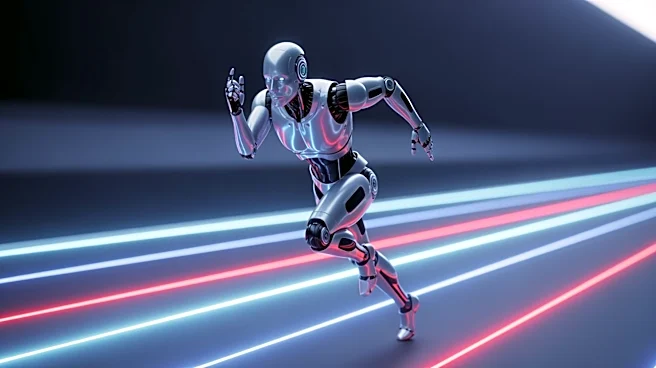
Humanoid robots are closing in on human sprint records, with recent competitions showcasing their rapid advancements. At the Beijing E-Town Humanoid Robot Half-Marathon, robots demonstrated significant improvements, with one completing the half-marathon
in just over 50 minutes. Additionally, a robot from Unitree achieved a speed of 10.1 meters per second, approaching Usain Bolt's 100-meter sprint record. These developments highlight the technological progress in robotics, driven by advancements in components like motors and computer chips. Despite the lack of immediate practical applications, these competitions serve as a testing ground for robotic capabilities.
Why It's Important?
The advancements in humanoid robot speed have implications for various industries, including manufacturing and logistics, where faster and more efficient robots could enhance productivity. The competitions also push the boundaries of robotics technology, leading to innovations that could be applied in other areas, such as prosthetics or autonomous vehicles. However, the focus on speed may divert resources from developing robots with broader practical applications. The ongoing improvements in robotics technology could eventually lead to robots that can perform complex tasks in human environments, potentially transforming industries and daily life.