







What's Happening?
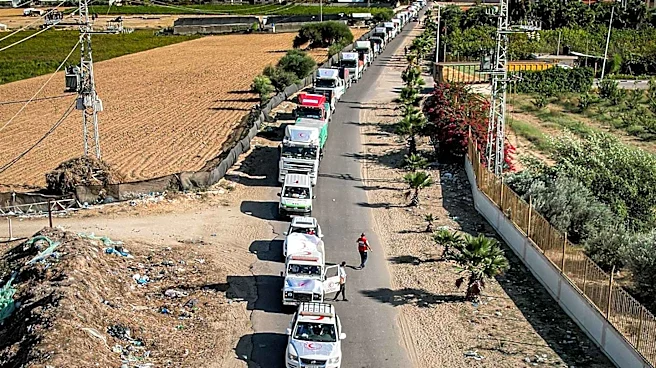
Gaza is confronting a potential return to famine conditions in 2025, following a confirmed famine in the region. The UN Food Agency, specifically the World Food Programme (WFP), has announced significant reductions in food assistance due to severe funding
shortfalls. This reduction is projected to leave approximately half a million Palestinians without essential support. Families in Gaza are already experiencing high levels of food insecurity, and the withdrawal of aid is intensifying fears of a severe hunger crisis. The situation is described as critical, with acute needs persisting even as humanitarian assistance is being scaled back.
Why It's Important?
The looming famine in Gaza highlights a critical humanitarian crisis with severe implications for regional stability and international aid efforts. The reduction in aid by the World Food Programme underscores the fragility of humanitarian operations in conflict zones and the devastating impact of funding shortfalls on vulnerable populations. This situation could lead to a significant increase in mortality rates, particularly among children and the elderly, and exacerbate existing health crises. Furthermore, it places immense pressure on international bodies and donor nations to address the funding gap and ensure sustained humanitarian access. The potential for widespread starvation could also fuel further instability and displacement in an already volatile region, posing challenges for global diplomatic efforts and peace initiatives.
What's Next?
The immediate focus will be on urgent appeals for increased funding to prevent a full-scale famine in Gaza. International organizations and humanitarian agencies are expected to intensify their advocacy efforts to secure the necessary resources to resume and expand food assistance. There will likely be continued pressure on donor countries to fulfill their commitments and provide additional financial support. Furthermore, discussions may arise regarding the mechanisms for aid delivery and ensuring unimpeded access to those in need, especially given the complex political and security landscape. The long-term outlook will depend on sustained international engagement and a resolution to the underlying factors contributing to food insecurity in the region.
Beyond the Headlines
The recurring threat of famine in Gaza points to deeper systemic issues beyond immediate funding shortfalls. It highlights the profound impact of prolonged conflict and political instability on civilian populations, where access to basic necessities becomes a weapon or a casualty of ongoing tensions. The reliance on external aid for survival in Gaza underscores a lack of sustainable economic infrastructure and self-sufficiency, making the population highly vulnerable to external shocks. This situation also raises ethical questions about the international community's responsibility to protect populations in crisis and the effectiveness of current humanitarian frameworks. The long-term implications include a generation of children suffering from malnutrition and its associated health and developmental problems, perpetuating a cycle of poverty and dependence.