
What's Happening?
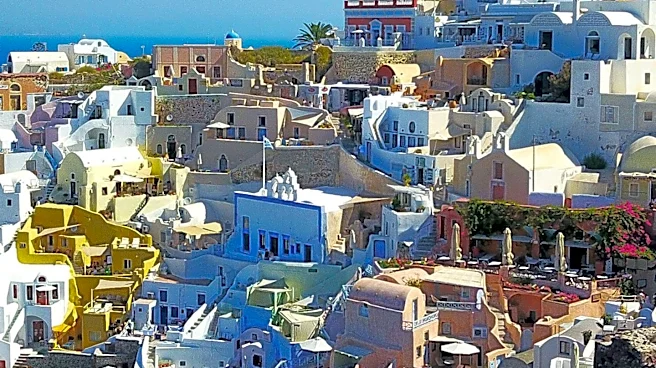
Santorini, an island in the Aegean Sea, was depopulated after a catastrophic volcanic eruption in the sixteenth century BC, which destroyed Minoan settlements like Akrotiri. The island, once a significant trade center, was later resettled. According to ancient
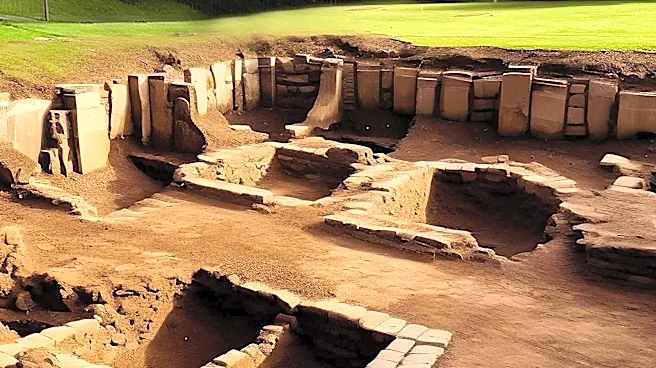
historian Herodotus, Phoenicians were the first to resettle Santorini after the eruption. He states that some of Cadmus's men, on their way from Phoenicia to Greece, decided to stay on the island in the ninth century BCE. Archaeological evidence supports this, with the earliest traces of Greek script on Santorini dating to this period, written in Phoenician characters but with Greek words. This aligns with the earliest post-Minoan settlement found at Ancient Thera, also dated to the ninth century BCE. Approximately eight generations later, in the seventh century BCE, Spartans arrived, led by Prince Theras, from whom the island received its name 'Thera.' This account is also corroborated by archaeological findings of Spartan presence from the seventh century BC.
Why It's Important?
The historical accounts and archaeological findings regarding Santorini's resettlement are crucial for understanding the island's cultural and demographic evolution. The initial Phoenician influence, evidenced by the early Greek script, highlights the significant role of cross-cultural exchange in the ancient Mediterranean. This interaction demonstrates how different civilizations contributed to the linguistic and cultural landscape of the region. The subsequent Spartan colonization under Theras further illustrates the expansionist policies and influence of major Greek city-states. This dual resettlement narrative provides a unique case study for historians and archaeologists, offering insights into post-catastrophe recovery and the dynamics of ancient migration and colonization. It also sheds light on the historical accuracy of ancient texts like Herodotus's writings when cross-referenced with archaeological data, reinforcing their value in reconstructing the past.
What's Next?
Future archaeological excavations and historical research on Santorini could potentially uncover more detailed evidence regarding the daily lives, social structures, and specific contributions of both the Phoenician and Spartan settlers. Further analysis of linguistic artifacts might reveal more about the evolution of the Greek language and its interaction with Phoenician influences. Researchers may also focus on identifying additional settlements or burial sites from these periods to gain a more comprehensive understanding of the population dynamics and cultural practices. Continued interdisciplinary studies, combining historical texts, archaeological data, and scientific dating methods, will likely refine the timeline and narrative of Santorini's post-Minoan history, offering deeper insights into the resilience of human civilization in the face of natural disasters and subsequent cultural transformations.
Beyond the Headlines
The story of Santorini's resettlement extends beyond mere historical facts, touching upon themes of human resilience, cultural diffusion, and the enduring impact of natural catastrophes. The island's ability to recover and thrive after a devastating volcanic eruption underscores humanity's capacity to adapt and rebuild. The blend of Phoenician and Spartan influences illustrates the complex tapestry of ancient Mediterranean cultures, where trade, migration, and conquest continually reshaped societies. This historical narrative also contributes to the broader understanding of the 'Atlantis' legend, as Santorini's Minoan eruption is often cited as a possible inspiration. The island's unique geological history and subsequent human habitation offer a compelling example of how environmental events can profoundly alter the course of human history and cultural development, leaving a lasting legacy that continues to be explored and interpreted today.