



What's Happening?
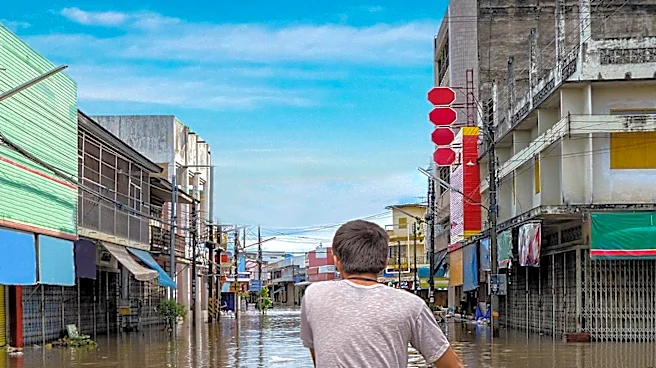
The aftermath of the 2025 floods in Milwaukee continues to affect residents and infrastructure, with many still recovering from the financial and emotional toll. The floods, caused by record-breaking rainfall, resulted in significant damage to homes and public
infrastructure. Despite receiving over $208 million in assistance from FEMA, many residents had to deplete their savings and take out loans for repairs. The denial of federal aid for public damages has left local governments struggling to cover repair costs. Efforts to mitigate future flooding are underway, with the Milwaukee Metropolitan Sewerage District accelerating projects to manage floodwaters.
Why It's Important?
The floods highlight the increasing risk of extreme weather events in Wisconsin, exacerbated by climate change. The financial strain on residents and local governments underscores the need for comprehensive disaster preparedness and response strategies. The denial of federal aid for public damages raises concerns about the adequacy of current disaster relief policies. The ongoing recovery efforts and infrastructure projects are crucial for enhancing the region's resilience to future flooding. This situation also emphasizes the importance of flood insurance and the need for updated floodplain maps that reflect current climate risks.
What's Next?
Milwaukee and surrounding areas are focusing on flood mitigation projects, including the construction of large storage basins and the expansion of green infrastructure. These efforts aim to prevent future flooding and reduce the impact on residents and infrastructure. The state and local governments may seek additional funding and policy changes to support these initiatives. The experience of the 2025 floods could influence future disaster preparedness and climate adaptation strategies in Wisconsin and other regions facing similar challenges.
Beyond the Headlines
The floods have prompted discussions about the role of climate change in increasing the frequency and severity of extreme weather events. The situation highlights the need for coordinated action across communities, businesses, and governments to address climate-related risks. The emotional and psychological impact on residents, who have lost homes and cherished belongings, is an important aspect of the recovery process. The floods also raise questions about the equity of disaster relief efforts, particularly for low-income communities disproportionately affected by such events.