
What's Happening?
Two major oil refineries in Tuapse, owned by Russian oil conglomerate Rosneft, have ceased operations following drone attacks. These attacks, attributed to Ukrainian forces, have significantly impacted
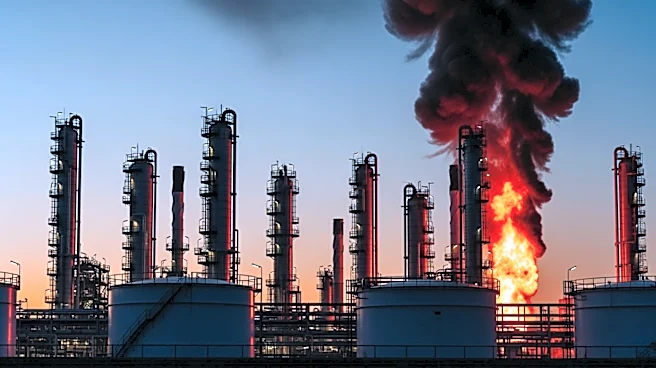
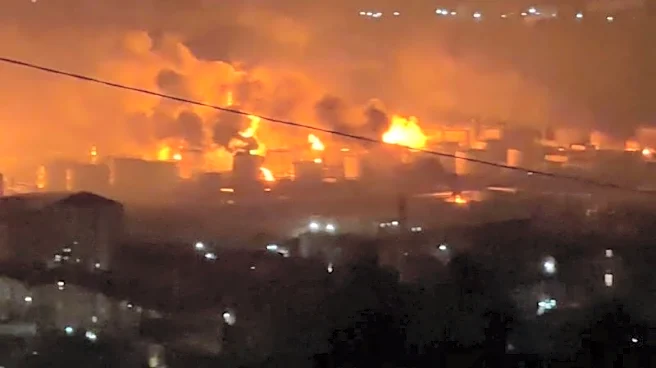
Russia's energy sector. The Tuapse refinery, located on the Black Sea coast, was forced to suspend operations after a Ukrainian drone attack on April 16, with further strikes reported on April 20. The facility, which primarily exports its output, halted processing due to damage to port infrastructure and a fire at oil storage facilities, making shipments impossible. The refinery has a capacity of around 12 million metric tons per year and produces naphtha, diesel, fuel oil, and vacuum gas oil. The latest attack triggered a fire in the storage tank area, requiring extensive firefighting efforts. The situation remains tense, with no clear timeline for when operations might resume.
Why It's Important?
The suspension of operations at the Tuapse refineries represents a significant blow to Russia's energy sector, which is already under pressure due to geopolitical tensions and sanctions. The disruption in oil production and export capabilities could exacerbate global energy supply issues, potentially leading to increased oil prices. This development also highlights the strategic use of drone technology in modern warfare, allowing for targeted strikes on critical infrastructure. For Ukraine, these attacks demonstrate its capability to disrupt Russian energy operations, potentially weakening Russia's economic position. The situation underscores the broader implications of the conflict, affecting not only regional stability but also global energy markets.
What's Next?
The ongoing conflict and its impact on energy infrastructure suggest that further disruptions could occur, affecting global oil supply and prices. Russia may seek to enhance its defensive measures to protect critical infrastructure from future attacks. Additionally, the international community may need to address the broader implications of such conflicts on global energy security. Diplomatic efforts to de-escalate tensions and find a resolution to the conflict could be crucial in stabilizing the situation. Meanwhile, energy companies and governments may need to explore alternative energy sources and strategies to mitigate the impact of such disruptions on global markets.