
What's Happening?
U.S. District Court Judge Indira Talwani is deliberating whether to extend her prohibition on the U.S. Postal Service's (USPS) proposed regulation of mail ballots. This effort stems from an executive order
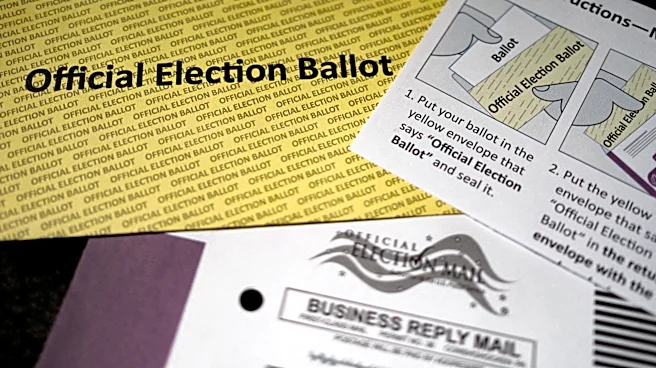
by President Trump. The hearing occurred just before the first state began sending mail ballots to voters for the midterm elections. Judge Talwani expressed concern that the USPS had not provided clear information on how it would implement the plan, stating, 'I have nothing from the USPS about how this will happen.' The administration's plan requires states to upload voter lists to an online portal and adhere to a uniform envelope style, with the USPS potentially refusing to deliver ballots that do not comply. Election officials have stated that complying with these directives would necessitate a complete overhaul of their operations, and the online portal was not active this week.
Why It's Important?
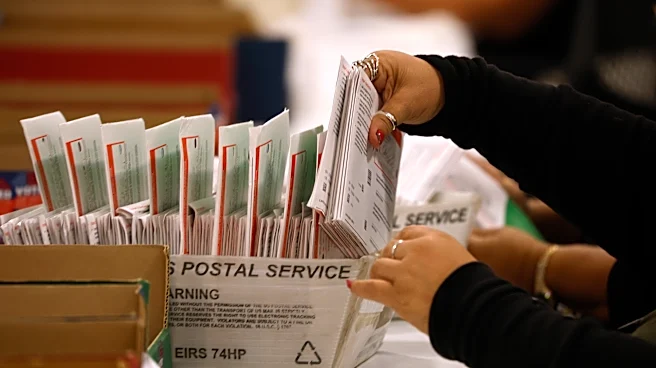
This judicial consideration is critical for the integrity and accessibility of the upcoming midterm elections. The proposed USPS regulations, if implemented, could significantly disrupt mail voting processes, potentially disenfranchising millions of voters. A whistleblower report warned that the new rule, which requires all ballots to be physically brought to post offices and could lead to entire batches being discarded due to a single barcode error, could result in millions of mail ballots never being sent. The dispute highlights a fundamental conflict over who has the authority to set election rules—the federal executive branch or the states and Congress. The outcome will determine whether states can proceed with their established mail-in voting procedures or face last-minute, potentially unworkable, federal mandates.
What's Next?
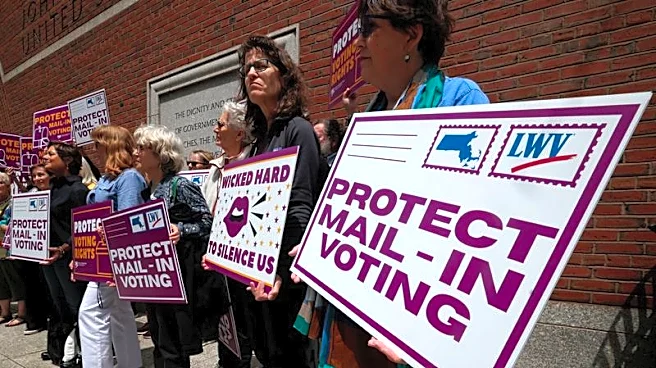
Judge Talwani is considering extending her temporary restraining order, which is set to expire next week. The Trump administration has indicated it will likely appeal to the Supreme Court if the ban is extended, seeking permission to implement the plan. The Supreme Court previously ruled that Talwani's initial order was premature because the USPS had not yet published regulations, which it has since done. Democrats and voting rights groups have re-filed lawsuits challenging the legality of the plan, arguing that the president lacks the authority to set election rules. The legal battle is expected to continue, with potential further appeals to the Supreme Court, as states begin the process of sending out mail ballots for the midterm elections.
Beyond the Headlines
This case delves into the broader implications of federal intervention in state-run election processes and the potential for executive orders to impact fundamental democratic rights. President Trump's long-standing opposition to mail voting and his past claims of fraud, despite using mail-in ballots himself, underscore the political motivations behind these changes. The legal challenge raises questions about the balance of power between federal and state governments in election administration, a cornerstone of U.S. democracy. The lack of clear implementation details from the USPS, coupled with the tight timeline before the elections, suggests a potential for chaos and voter confusion, which could erode public confidence in the electoral system. The outcome will set a precedent for future federal attempts to regulate voting procedures.