






What's Happening?
Researchers at the University of Iowa Health Care have uncovered that specific genetic sequences, which evolved before the divergence of humans and Neanderthals, significantly impact human language abilities. The study, led by Jacob Michaelson, Ph.D.,
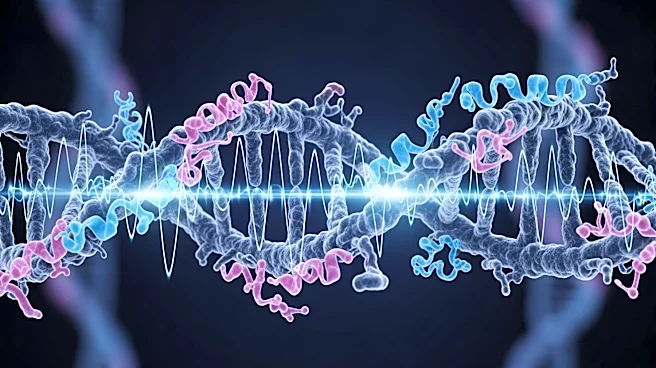
highlights the role of Human Ancestor Quickly Evolved Regions (HAQERs) in shaping language development. These genetic sequences, although constituting less than a tenth of a percent of the genome, have a profound influence on language capabilities, acting as regulatory regions that modulate gene expression. The research suggests that Neanderthals possessed these 'volume knobs' for language, indicating that the genetic foundation for complex communication existed earlier than previously thought. This discovery challenges the understanding of when human speech began and suggests that Neanderthals may have had some form of complex communication.
Why It's Important?
The findings have significant implications for understanding human evolution and the development of language. By identifying the genetic components that contribute to language abilities, this research provides insights into the evolutionary processes that have shaped human cognition and communication. The study suggests that the genetic 'hardware' for language was present in Neanderthals, which could reshape theories about the cognitive abilities of ancient hominins. This research also highlights the evolutionary trade-offs that have occurred, where the development of larger brains for language was balanced by the physical constraints of childbirth. Understanding these genetic influences can inform studies on language disorders and cognitive development, potentially leading to new approaches in education and therapy.
What's Next?
The research team plans to further investigate the genetic and environmental factors influencing language development by studying the descendants of the original cohort analyzed in the 1990s. This expanded research could help disentangle the genetic and environmental contributions to language mastery, providing a clearer picture of how language abilities are inherited and developed. The findings could also lead to advancements in understanding genetic nurture, where parental genetics influence the environment they create for their children, impacting language acquisition. These future studies may offer valuable insights for clinical applications, particularly in diagnosing and treating language-related disorders.
Beyond the Headlines
The study raises questions about the cultural and social structures of Neanderthals, suggesting that they may have had more complex forms of communication than previously assumed. This could lead to a reevaluation of the cognitive and social capabilities of Neanderthals, potentially altering the narrative of human evolution. Additionally, the research underscores the importance of genetic regulatory regions in evolution, which could have broader implications for understanding other aspects of human biology and disease. The concept of balancing selection, where evolutionary pressures maintain certain genetic traits, highlights the intricate dynamics of evolution and adaptation.