




What's Happening?
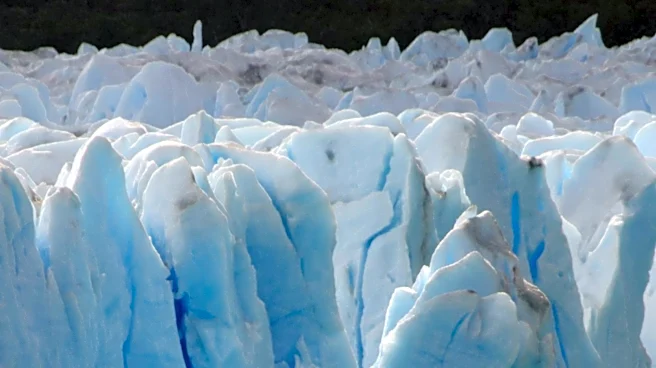
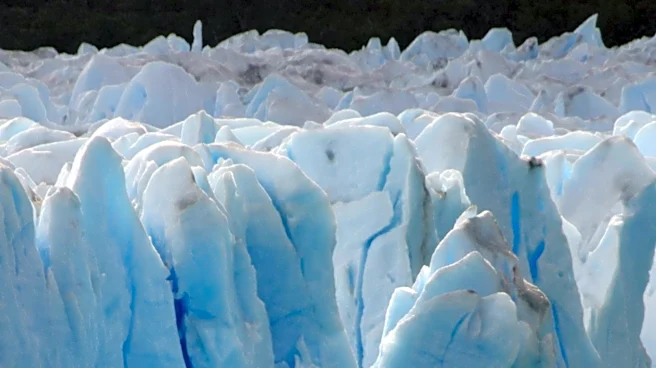
Thwaites Glacier, located in West Antarctica, is undergoing significant changes that could have global implications. Known as the 'Doomsday Glacier,' it is responsible for 4% of global sea-level rise. The glacier's eastern ice shelf, which acts as a brace
against warm ocean waters, is at risk of breaking away. If this occurs, it could accelerate the glacier's retreat and potentially lead to the collapse of the entire West Antarctic Ice Sheet. Such a collapse would result in a global sea-level rise of over 3 meters, drastically altering coastlines worldwide. The International Thwaites Glacier Collaboration, a U.S.-U.K. research initiative, is actively studying the glacier to predict its future behavior.
Why It's Important?
The potential collapse of Thwaites Glacier poses a significant threat to global sea levels, which could rise by more than 3 meters if the glacier and the West Antarctic Ice Sheet collapse. This would have catastrophic effects on coastal cities around the world, leading to widespread displacement and economic disruption. Understanding the glacier's behavior is crucial for predicting future sea-level changes and preparing for their impacts. The research being conducted is vital for informing global climate policy and mitigation strategies.
What's Next?
Scientists are continuing to study Thwaites Glacier to better understand the timeline and mechanisms of its potential collapse. Ongoing research includes drilling through the ice to observe how warm ocean water is affecting the glacier from below. Future studies will focus on modeling the glacier's behavior under various climate scenarios to predict its impact on global sea levels. The findings will be critical for developing strategies to mitigate the effects of rising sea levels on vulnerable coastal regions.