




What's Happening?
Researchers led by Professor Joonki Suh have developed a next-generation polarization sensor that improves the accuracy of autonomous driving and medical diagnostics. Published in Nature Sensors, the sensor technology utilizes a self-reconfigurable polarization sensor array
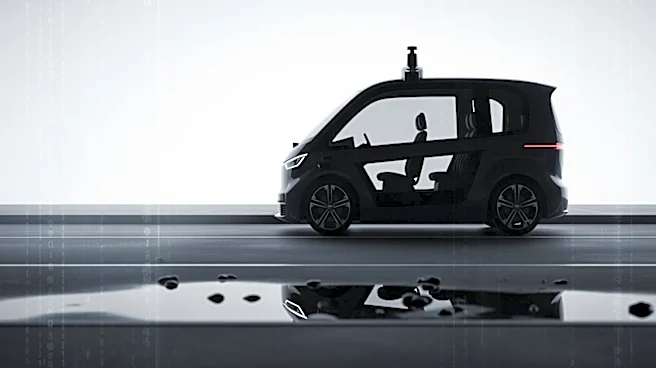
that adjusts its operation based on light polarization. This advancement allows the sensor to distinguish between different surfaces, such as water and asphalt, on dark roads, enhancing the safety and efficiency of autonomous vehicles. The sensor's ability to process vast amounts of information with low energy consumption is a significant step forward in AI-driven vision systems.
Why It's Important?
The development of this polarization sensor represents a major leap in sensor technology, addressing limitations of existing systems that only detect light intensity. By incorporating polarization information, the sensor can provide richer visual data, crucial for applications in autonomous driving and medical imaging. This technology could lead to safer and more reliable autonomous vehicles, as well as more accurate medical diagnostics. The ability to process complex optical information efficiently also supports the growing demand for low-power, high-efficiency AI systems, potentially transforming industries reliant on advanced vision technologies.
What's Next?
The successful implementation of this sensor technology could pave the way for its integration into commercial autonomous vehicles and medical imaging devices. As the technology matures, it may attract interest from automotive and healthcare industries looking to enhance their products' capabilities. Further research and development could focus on optimizing the sensor's performance and exploring additional applications in other fields. The collaboration between academia and industry will be crucial in bringing this innovative technology to market.