





What's Happening?
The Central Business Improvement District (CBID) in Fort Smith has approved the first phase of renovation and renewal for Cisterna Park. This initial phase, contracted with Fort Smith-based MAHG Architecture, focuses on developing a conceptual design
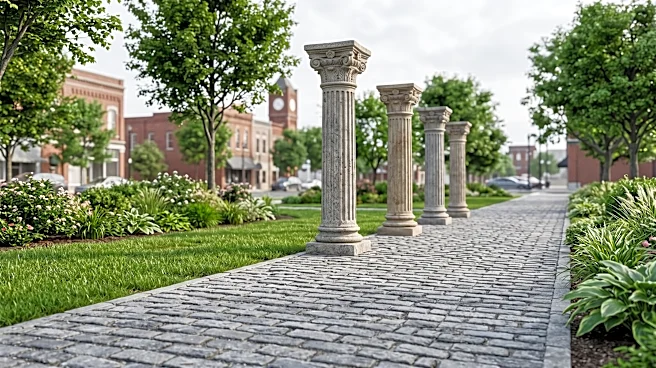
to estimate project costs. The park, located at 1001 Garrison Ave., is named after Fort Smith's sister city, Cisterna, Italy, and honors U.S. Gen. William Darby, who was born and raised in Fort Smith and led 'Darby's Rangers' during World War II. A statue of Darby was unveiled in the park in April 2016. Ideas for the renovation, gathered during an October 13 session, include incorporating historical elements like cobblestone walkways and replicas of historic pillars, as well as creating a veterans memorial plaza. The CBID will cover the fee for this first phase, which is expected to take approximately four months to complete. Funding for subsequent phases has not yet been determined, with Fort Smith City Administrator Jeff Dingman indicating that discussions will occur as plans solidify. Previous conversations have suggested a mix of private donations and public funding for a comprehensive renovation.
Why It's Important?
This renovation project holds significant importance for downtown Fort Smith, aiming to revitalize a key public space and enhance its appeal to both residents and visitors. By incorporating historical elements related to Cisterna, Italy, and Gen. William Darby, the park will serve as a cultural and historical landmark, potentially boosting local tourism and civic pride. The development of a veterans memorial plaza within the park underscores a commitment to honoring military service, which can resonate deeply within the community. From an economic perspective, the improvements are intended to activate the park and encourage patronage of businesses within the downtown district, aligning with the CBID's goal of assisting property owners. The project's success could set a precedent for future public-private partnerships in urban development, demonstrating how collaborative efforts can lead to meaningful community enhancements and economic growth.
What's Next?
The immediate next step involves MAHG Architecture developing the conceptual design for Cisterna Park over the next four months. This phase will include identifying park components, creating a layout, and coordinating with engineers and architects to estimate costs. Once the conceptual design is complete, discussions will commence regarding funding for subsequent phases of the project, with Fort Smith City Administrator Jeff Dingman playing a key role in these conversations. Redevelopment plans will require review by the city’s Parks and Recreation Commission and ultimately need approval from the Fort Smith Board of Directors. The project's progression will depend on securing the necessary funding, potentially through a combination of private donations and public funds, as previously discussed. The challenge for MAHG Architecture will be to integrate the various ideas into a cohesive design that honors the park's history while creating an engaging public space.
Beyond the Headlines
The renovation of Cisterna Park extends beyond mere aesthetic improvements; it represents a deeper commitment to preserving and celebrating local history and international connections. The park's namesake, Cisterna, Italy, and its connection to Gen. William Darby, highlight a unique aspect of Fort Smith's heritage. By integrating elements like cobblestone walkways and historic pillars, the project aims to create a tangible link to the past, fostering a sense of continuity and identity. The proposed veterans memorial plaza also speaks to the community's values, providing a dedicated space for remembrance and reflection. This initiative could serve as a model for other cities looking to leverage their historical narratives for urban revitalization, demonstrating how public spaces can be transformed into vibrant centers that honor the past while serving contemporary community needs. The emphasis on activating the park to support local businesses also reflects a broader trend in urban planning to integrate cultural and economic development.