





What's Happening?
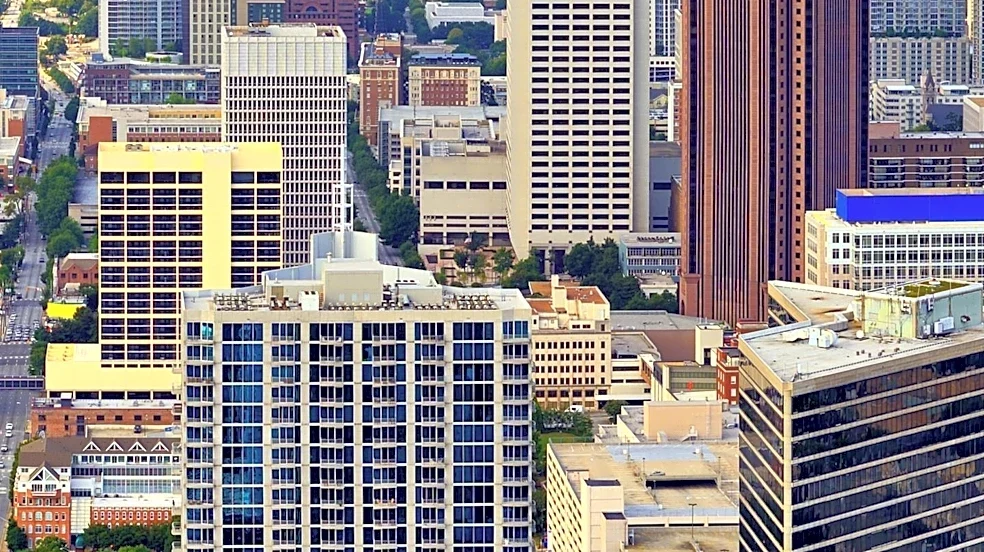
Atlanta's ambitious plans to transform underused office buildings into residential units have largely stalled due to various economic factors. Following the COVID-19 pandemic, many envisioned converting vacant workplace towers into homes to address housing
needs. However, proposals for high-profile projects, such as the conversion of 2 Peachtree Street NW and the Georgia-Pacific Tower, have encountered significant economic hurdles, leaving most in limbo or abandoned. The primary obstacles include rising construction and labor costs, stagnant apartment rents, and anticipated interest rate hikes, which increase debt expenses. Developers, like Shaneel Lalani of Underground Atlanta, emphasize that while conversions are technically possible, they are often not financially viable under current market conditions, making it too expensive to build.
Why It's Important?
The stagnation of Atlanta's office-to-residential conversion projects is a critical indicator of the broader economic challenges facing urban redevelopment across the U.S. This situation impacts the revitalization of downtown areas, which suffer from high office vacancies and a lack of vibrant activity. The inability to repurpose these buildings means lost opportunities for increasing housing supply, particularly in a market where housing affordability is a growing concern. It also affects local economies by reducing potential property tax revenues and hindering the growth of supporting businesses that rely on a dense residential population. The economic realities in Atlanta highlight that even with a clear need and available space, the financial feasibility of such large-scale urban transformations remains a significant barrier for developers and city planners.
What's Next?
For Atlanta, the immediate future will likely involve a re-evaluation of economic incentives and policy frameworks to make office-to-residential conversions more attractive. City officials and developers may need to explore new funding mechanisms, tax abatements, or public-private partnerships to offset the high costs of construction and labor. There might also be a push for more flexible zoning or building code adjustments that can reduce conversion expenses without compromising safety. The success of a few ongoing or completed downtown projects could provide valuable insights and models for future endeavors. However, until the underlying economic pressures of rising costs and interest rates ease, many proposed conversions are expected to remain in a state of uncertainty, requiring innovative solutions to move forward.
Beyond the Headlines
The challenges in Atlanta's office-to-residential conversions point to a deeper structural issue within the commercial real estate market and urban planning. The pandemic-induced shift to remote work has fundamentally altered the demand for office space, creating a surplus that cities are struggling to absorb. This situation forces a re-examination of urban cores' purpose and design, moving beyond a sole focus on commercial activity to a more mixed-use, residential-centric model. The economic difficulties also highlight the fragility of urban development projects in the face of fluctuating market conditions and the need for long-term, resilient strategies. Furthermore, it raises questions about the role of government intervention in stimulating redevelopment when private investment alone is insufficient, potentially leading to new policy approaches that blend economic development with social housing needs.