



What's Happening?
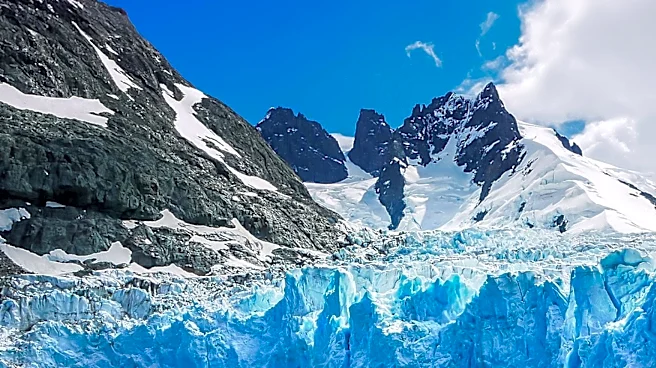
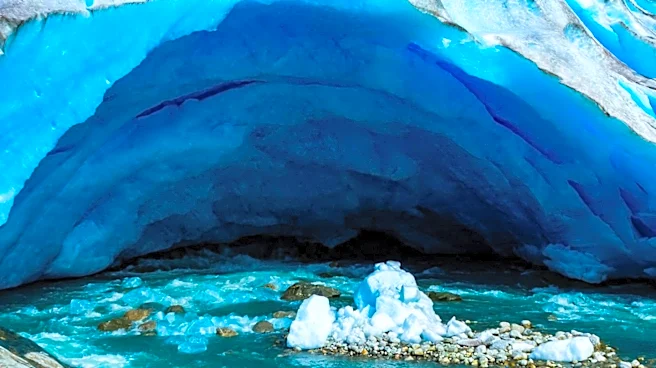
Hubbard Glacier is highlighted as a prominent Alaskan glacier, known for its significant size, vibrant blue hues, and active calving. This glacier is considered a major attraction for those cruising in Alaskan waters, offering a dramatic display as large
ice chunks break off and fall into the sea. The process of calving is influenced by the glacier's thickness and the steepness of the land it traverses, rather than solely by temperature. Ships typically approach within a quarter to half-mile of the glacier's face, though ice conditions can sometimes necessitate a greater distance. Hubbard Glacier is part of the 13.2 million-acre Wrangell-St. Elias National Park and Preserve, a UNESCO World Heritage Site, where glaciers cover 35% of the park. It is often referred to as 'The Galloping Glacier' due to its century-long advance into Disenchantment Bay.
Why It's Important?
The prominence of Hubbard Glacier as a tourist destination underscores the economic importance of glacier tourism for Alaska's cruise industry and local economies. The dramatic natural phenomena, such as calving, attract a significant number of visitors, supporting cruise lines, tour operators, and related services. The glacier's status as part of a UNESCO World Heritage Site also highlights its ecological and geological significance, drawing attention to the broader environmental landscape of Alaska. The continuous advance of Hubbard Glacier, despite its overall stability, provides a natural laboratory for studying glacial dynamics, which is crucial for scientific understanding of ice formations and their interaction with the environment. This natural spectacle contributes to Alaska's appeal as a premier destination for nature and adventure tourism.
What's Next?
Cruise lines will likely continue to feature Hubbard Glacier prominently in their Alaskan itineraries, particularly for one-way or longer cruises, to meet tourist demand for dramatic glacier viewing. Efforts will continue to manage visitor access and ensure safety given the dynamic nature of calving events and ice conditions. Naturalists on board cruise ships will remain essential for educating visitors about the glacier's characteristics and the surrounding wildlife, enhancing the visitor experience. The ongoing monitoring of Hubbard Glacier's advance and calving activity will be crucial for both scientific research and for informing safe navigation practices for vessels in Disenchantment Bay. Future tourism strategies may also focus on balancing visitor numbers with environmental preservation efforts in the Wrangell-St. Elias National Park and Preserve.
Beyond the Headlines
The allure of Hubbard Glacier extends beyond its immediate visual impact, touching upon broader themes of climate change and environmental conservation. While the source notes that calving is not directly related to temperature, the overall health and behavior of glaciers globally are significant indicators of climate shifts. The 'Galloping Glacier' moniker, reflecting its continuous advance, offers a counter-narrative to the more common story of retreating glaciers, prompting deeper inquiry into specific regional glacial dynamics. The interaction between massive ice formations and the marine environment also creates unique ecosystems, supporting diverse wildlife. The preservation of such natural wonders, and the responsible tourism practices surrounding them, are critical for maintaining both ecological balance and the cultural heritage associated with these majestic landscapes.